Can You Use Affiliate Links On Medium? What The Rules Allow
You wrote a helpful story on Medium, and now you want to add a link that pays you when a reader buys. Then a worry shows up. Will Medium pull the story, or will the affiliate program shut you down?
Short answer: affiliate links can work on Medium if you follow the rules of your affiliate program and tell readers about the links. Allowed does not mean risk free, because Medium also lists affiliate marketing in the guise of product reviews as a reason for suspension.
Your affiliate program adds its own rules on top, and the FTC cares about how you tell readers that you earn money. The seven steps below cover the program, Medium, the FTC, story type, the Partner Program, tracking, and safer options.
Disclosure: Some of the links I share might be affiliate links. If you click on one and make a purchase, I may earn a small commission as a thank you. But don’t worry, it won’t cost you anything extra. I only recommend stuff I genuinely believe in. Your support helps me keep creating awesome content. You can read my full affiliate disclosure in my disclaimer page.
Search 1,500+ affiliate programs in the Blogsepaise Program Database and filter them by category, network and commission type, then go straight to each program's signup page. The Link Health Monitor then checks your posts for broken, redirected and untagged affiliate links.
Why The Answer Depends On Three Rule Books
Think of it as three layers: the affiliate program, Medium, and the FTC. A link has to pass all three, and the strictest layer wins.
Each program decides where your links may appear, and breaking its terms can cost you commissions. Medium decides what can stay on its platform.
The FTC cares about how you tell readers that you earn money. A link that the program and Medium both allow can still cause trouble if the disclosure is hidden.
Many beginners check only Medium and forget the program. Others check only the program, and then a missing disclosure or a spammy pattern gets the story into trouble on Medium.
Where a rule is unclear, stick with what a careful reader would call honest, useful, and clearly labeled. Read the current rules yourself before you publish, because policies change.
If you want the wider picture of seeding content on Quora and Medium, read our guide on using Quora and Medium first. The article you are reading goes deeper on the rules only.
Step 1: Check The Affiliate Program's Rules First
Start with the program, because it can end your earnings. Open the terms and look for the words site, social media, app, and links.
Amazon Associates gets the most questions, so it gets the most space here. Its Operating Agreement says the program lets you monetize your website, social media user-generated content, online software application, or Alexa skill, and it calls that your Site.
A Medium story is user-generated content, so it can fit that wording, but Amazon's agreement does not name Medium. Amazon's Participation Requirements say you must identify your Site or Sites in your application, so add your Medium profile before you publish a tagged link there.
Amazon also says your Site must contain original content and be publicly available at the address provided in the application. A story behind a paywall is not open to every reader, so keeping Amazon-linked stories free to read is the safer choice.
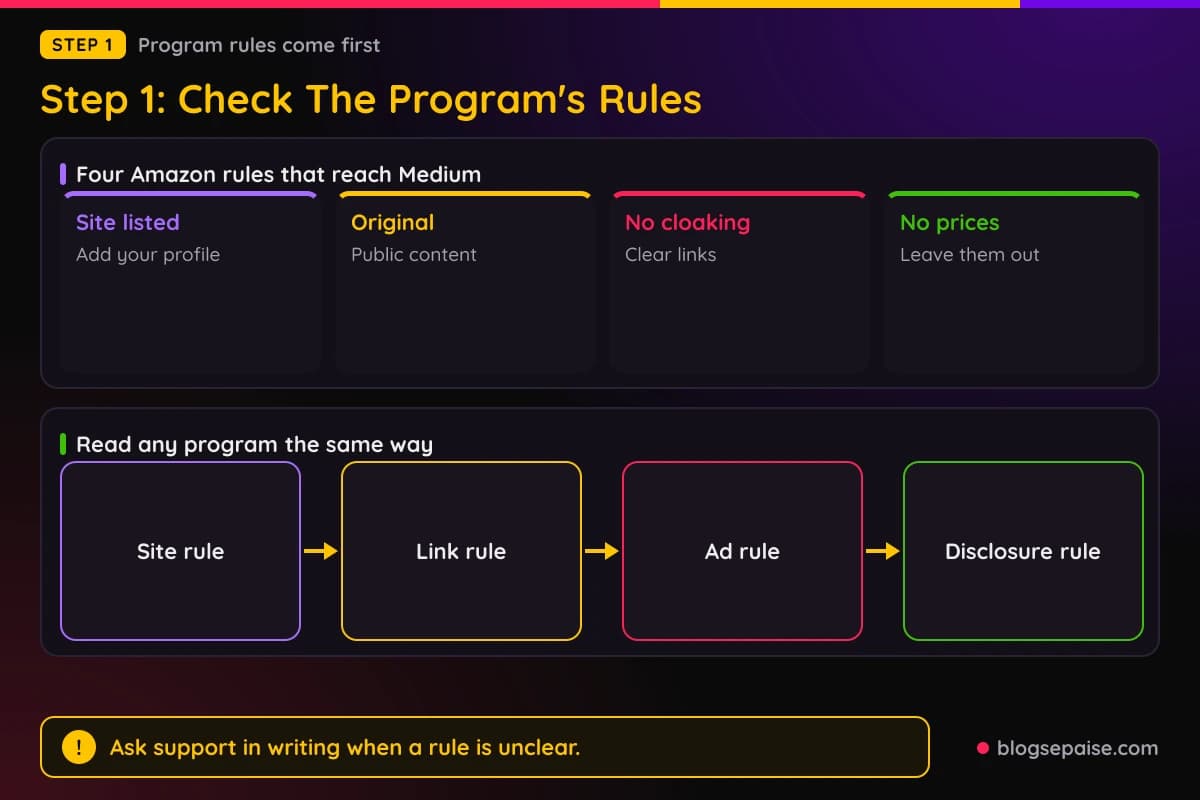
Link tricks are out. Amazon says you may not cloak, hide, spoof, or otherwise obscure the URL of your Site, and a shortener cannot make it unclear that you are linking to Amazon.
Prices need care too. Amazon says a Site may show prices only under specific conditions, such as when Amazon serves the link or the data comes from its approved tools, so leave typed prices out of the story.
Bought ads earn nothing. Amazon excludes purchases made by customers who arrive through an advertisement you purchased, so paying to promote a Medium story that holds your tagged link is a poor plan.
Amazon also requires a disclosure line. Section 5 of the Operating Agreement says to display "As an Amazon Associate I earn from qualifying purchases" on your Site.
Other programs differ. A software program may allow social posts, ban brand-name ads, or want each site approved, so read each set of terms before you place a link.
Use a quick test for any program. Find the site rule, the link format rule, the ad rule, and the disclosure rule.
If any of the four is unclear, ask the program's support team in writing. Keep the reply, because it is the best proof you can have if a commission is ever questioned.
Step 2: Read Medium's Rules On Affiliate Links
Read Medium's Rules and its help center before you publish, and write down the date you checked. Medium's help center lists affiliate marketing in the guise of reviews of products or services, written by AI or by hand, as a reason for suspension or restriction.
The same list includes using deception to generate revenue or traffic. Put the two together and the pattern is clear.
A story that gives real help and holds a few labeled links is on safer ground. A fake review whose only job is to push a buy button is not.
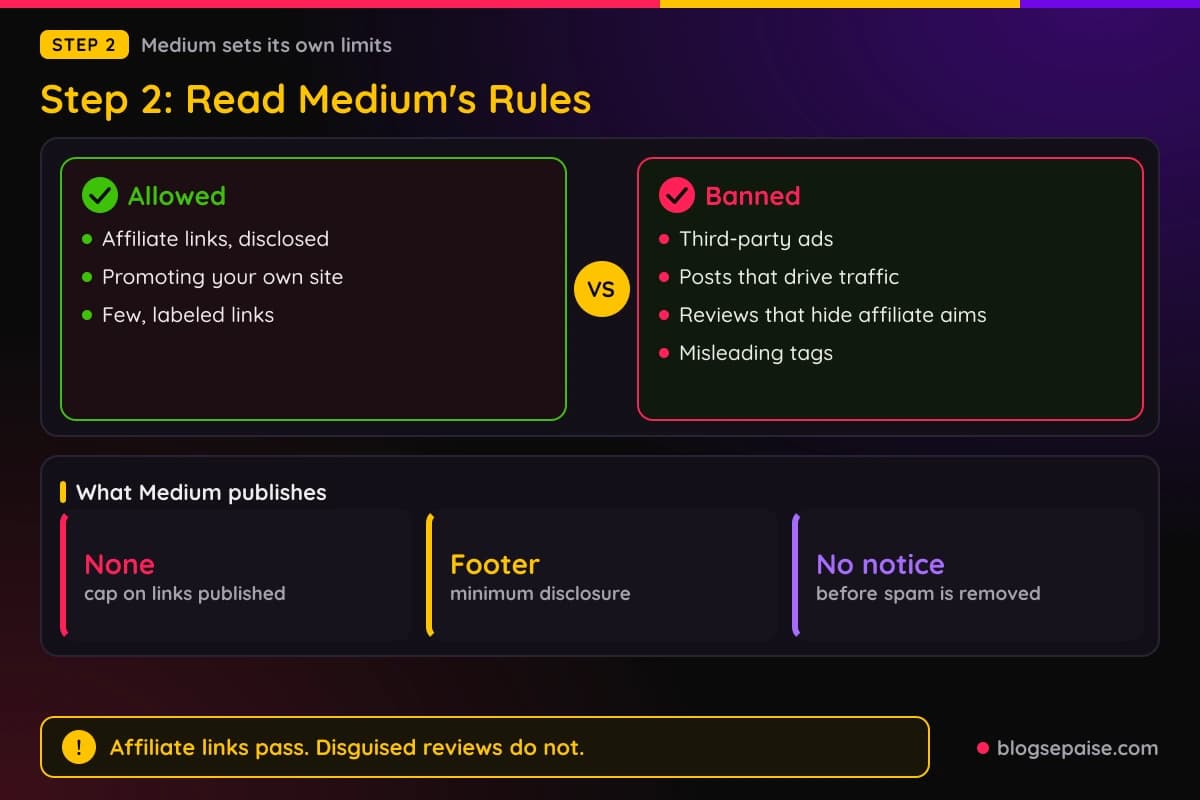
Your own writing should stand as useful on its own. A story that reads like an ad for someone else's product invites trouble.
Do not write a title that promises one thing while the link sends readers somewhere else. Misleading titles and links are deceptive in any rule book.
Keep a copy of every story as a draft file on your own computer. If Medium ever removes a story, you can fix it and republish without starting over.
Step 3: Disclose Every Link The Right Way
The FTC says to disclose when you have any financial, employment, personal, or family relationship with a brand. An affiliate commission is a financial relationship.
The FTC also says to place the disclosure with the endorsement itself and to make it hard to miss. It says not to put it on a profile page, at the end of a post, or behind a "more" link.
That is why a footer-only disclosure is risky. Put a plain note near the links instead.
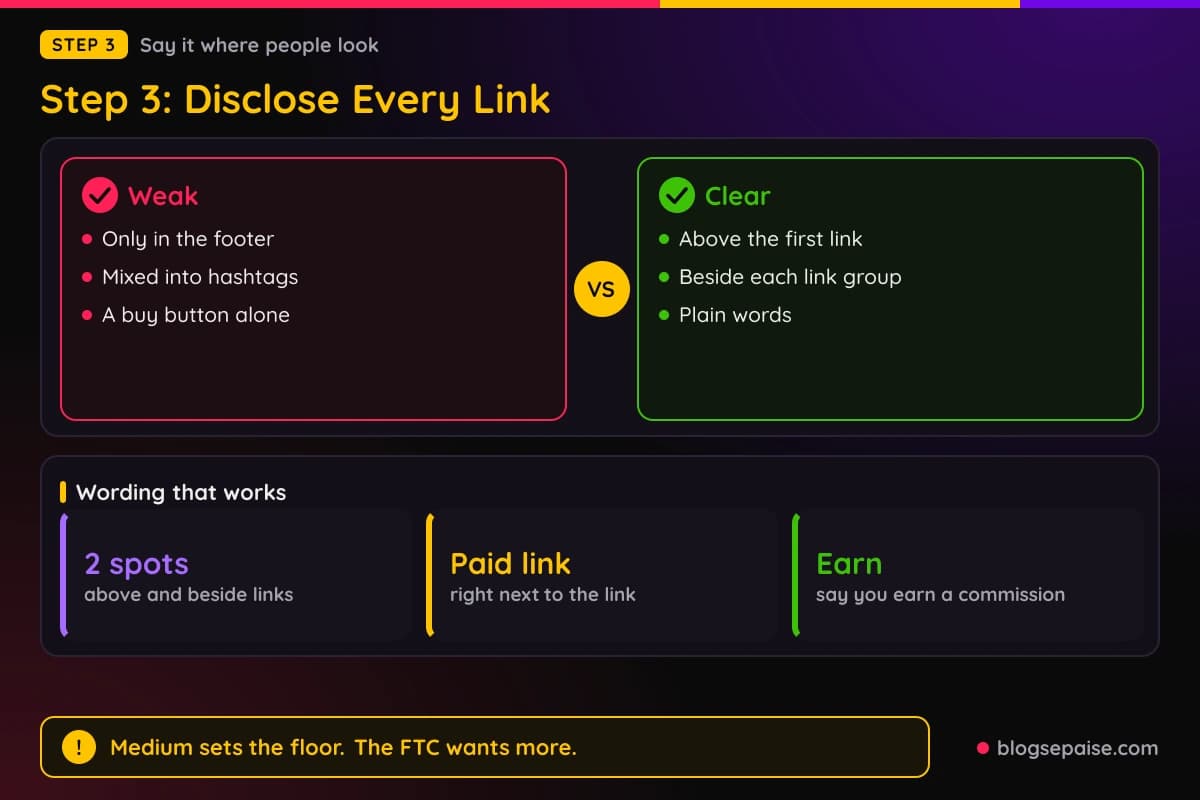
Use simple wording that says you earn money from the purchase. A buy button alone is not enough.
Do not hide the note in a pile of hashtags or links. The FTC says not to mix your disclosure into a group of hashtags or links.
Add Amazon's own line too if you use Amazon. "As an Amazon Associate I earn from qualifying purchases" belongs on your Site.
Free products and perks need a disclosure too. The FTC says a free or discounted product counts as a financial tie, and to disclose even if you think your opinion is unbiased.
Keep the wording the same from story to story. Readers learn to spot it, and you never have to wonder if you forgot.
Do not rely on a platform tool alone. The FTC says to use a platform's disclosure tool in addition to your own good disclosure.
Our affiliate disclosure generator writes the sentence for you if you want a quick draft.
Step 4: Choose The Story Type And Link Placement
Not every story suits an affiliate link. Pick the type first, then decide where the links go.
A how-to story is a good fit. You teach a task and mention the tools you used, so a link feels like help and not a sales pitch.
A comparison or buying guide also works, as long as you have used the products and say what you liked and what you did not. Medium lists disguised reviews as a suspension reason, so real use is your protection.
A personal story with one link in a natural spot is fine. A story that reads like a list of buy buttons is not.
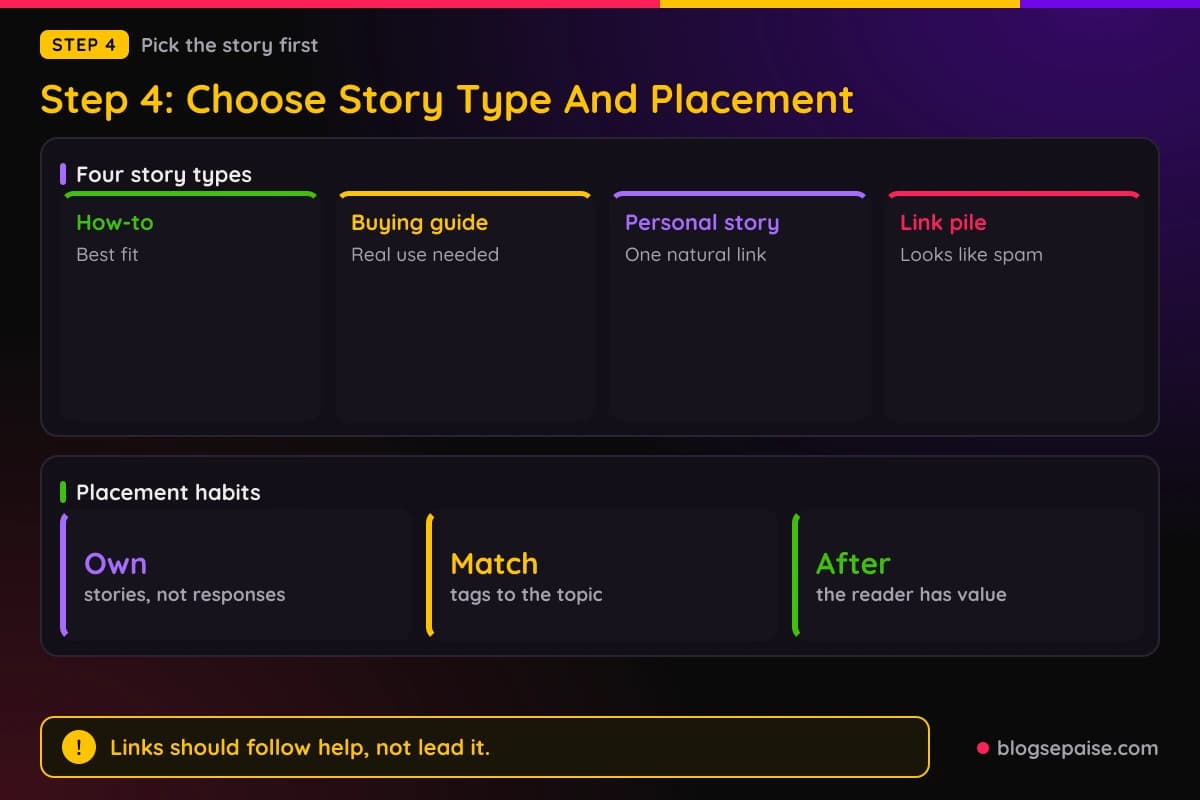
Keep the links few. A story with one link per section reads like a guide, and a story with a link in every sentence reads like an ad.
Put each link next to the sentence that explains why the product helps. Describe the product in your own words, and use plain link text that names the product.
Put the value up front and let the links come after readers have a reason to click. Choose tags and titles that match what the story is about.
Publications set their own submission rules. Read an editor's guidelines before you submit a story with affiliate links.
Write each story so it stands alone. A reader should get the full answer without clicking anything.
Step 5: Know How The Partner Program Fits In
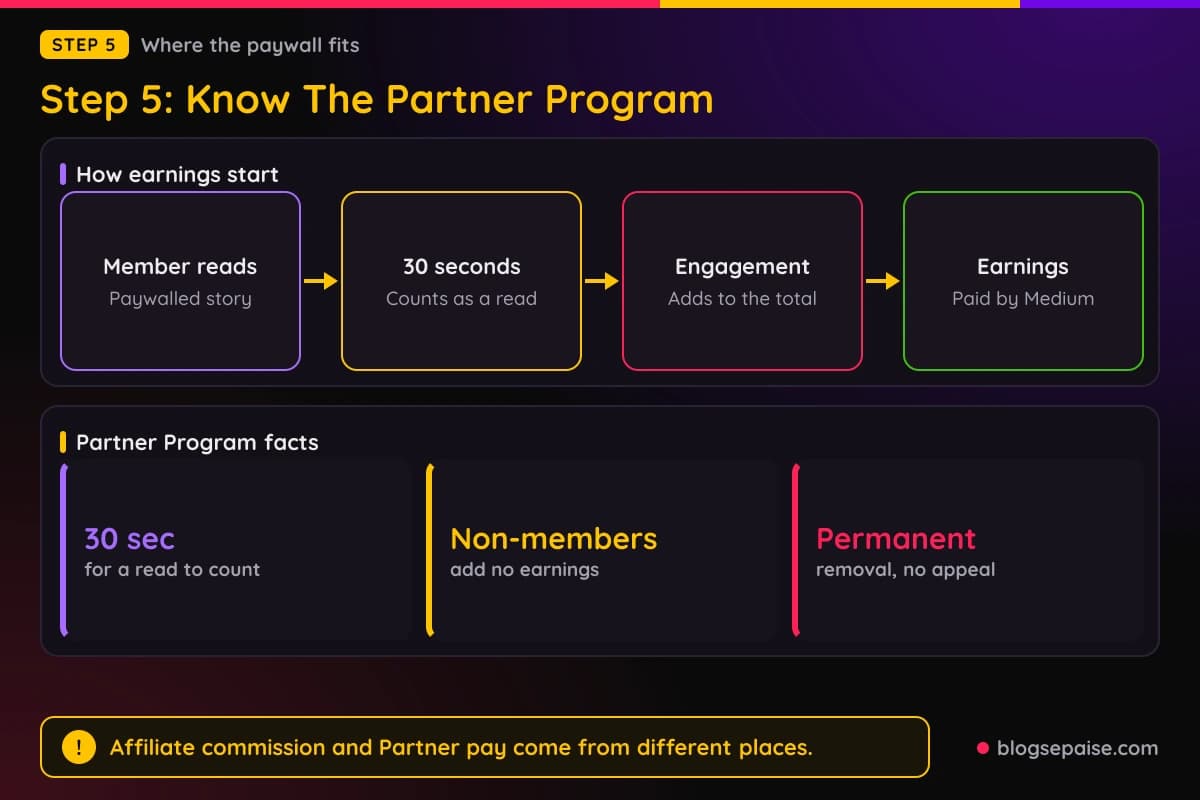
The Partner Program pays writers for member activity on paywalled stories. Medium's help center lists abusing the Medium Partner Program among the reasons for suspension or restriction.
Affiliate commission and Partner Program pay come from different places. The commission comes from your affiliate program, and Partner Program pay comes from Medium.
Amazon wants your Site to be publicly available, so a free story fits Amazon's rule more cleanly than a locked one. Pick the goal for each story before you publish.
Do not add links to a locked story and then hide the disclosure because it feels out of place. Members read the same words, and the FTC rules apply the same way.
Keep your own records of which stories are locked. You will need that list when you compare results in Step 6.
Step 6: Track What Your Links Do
Tracking tells you which stories earn and which only feel productive. Without it you are guessing.
Start with Medium's Stats page, which shows views and reads for each story. Then match those numbers with your program reports.
If your program lets you set a separate tracking tag, use one tag per story. Record views, clicks, orders, and commission in a simple sheet.
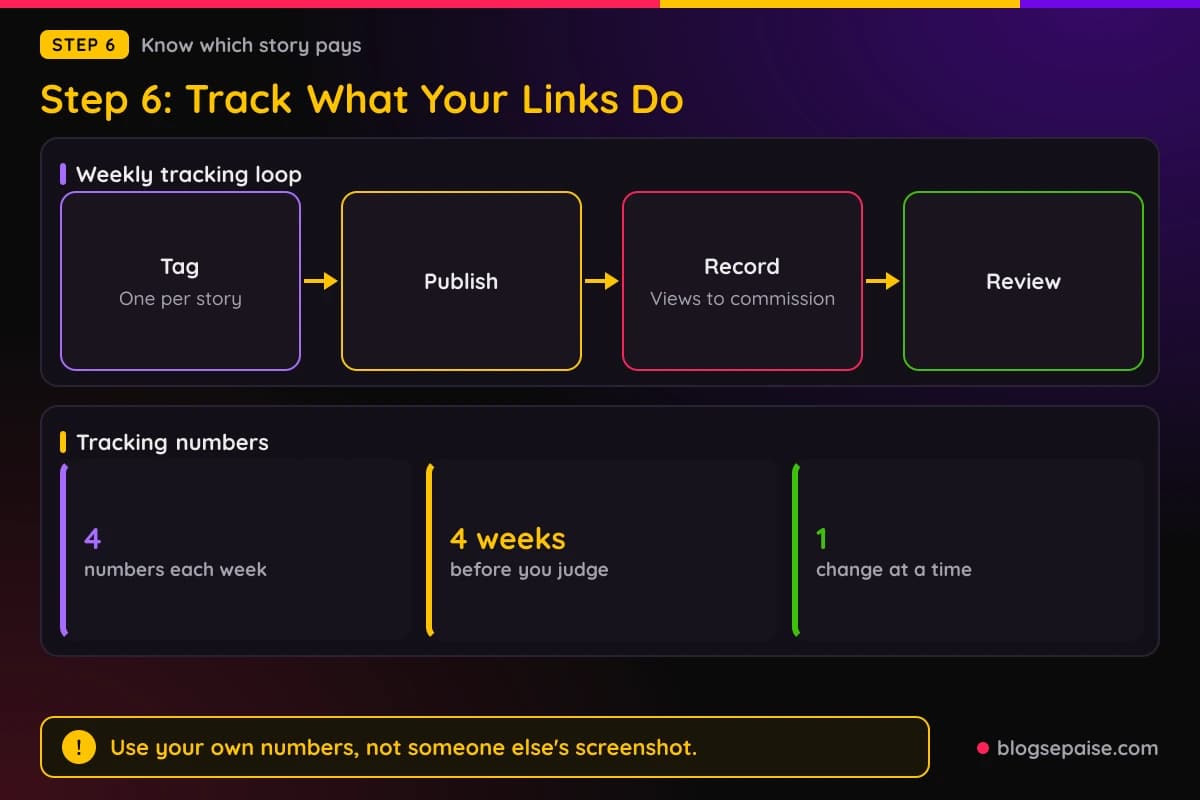
Add one more column for notes. Write down the story type, the disclosure placement, and if the story was free or locked.
Give each test a few weeks before you judge it, because one slow week tells you nothing. Change only one thing at a time so you know which change helped.
Do not borrow someone else's income screenshot. Use your own numbers.
Save a copy of the rules you read, with the date. If a policy changes later, you can show what you followed.
Step 7: Pick Safer Alternatives When Unsure
One safer path is to write a complete, helpful story and link to your own site, where the affiliate links and the full disclosure live. The story must still give real value on its own.
A link to your newsletter works too. Add a short note next to it saying it opens outside Medium.
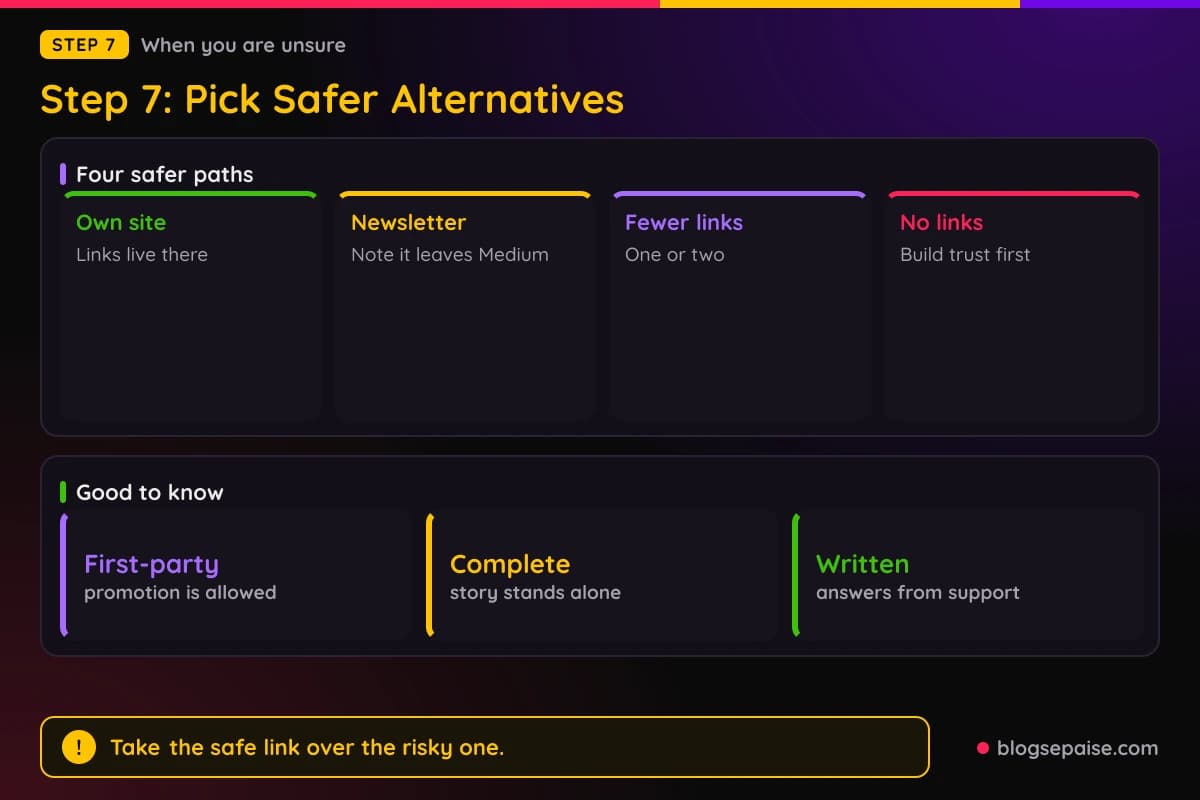
Another option is to use only one or two affiliate links in a story and place them where the product truly helps. Fewer links mean fewer chances for a reader to feel sold to.
You can also skip links on Medium and build trust there. Readers who like your writing can follow you to your own site, where you control the rules.
If you want other places to share links, compare the rules for Facebook and Pinterest. Each platform has its own limits.
When a rule is unclear, ask your program's support team and save the written answer. If the choice is between a risky link and a safe one, take the safe one.
Common Mistakes When Using Affiliate Links On Medium
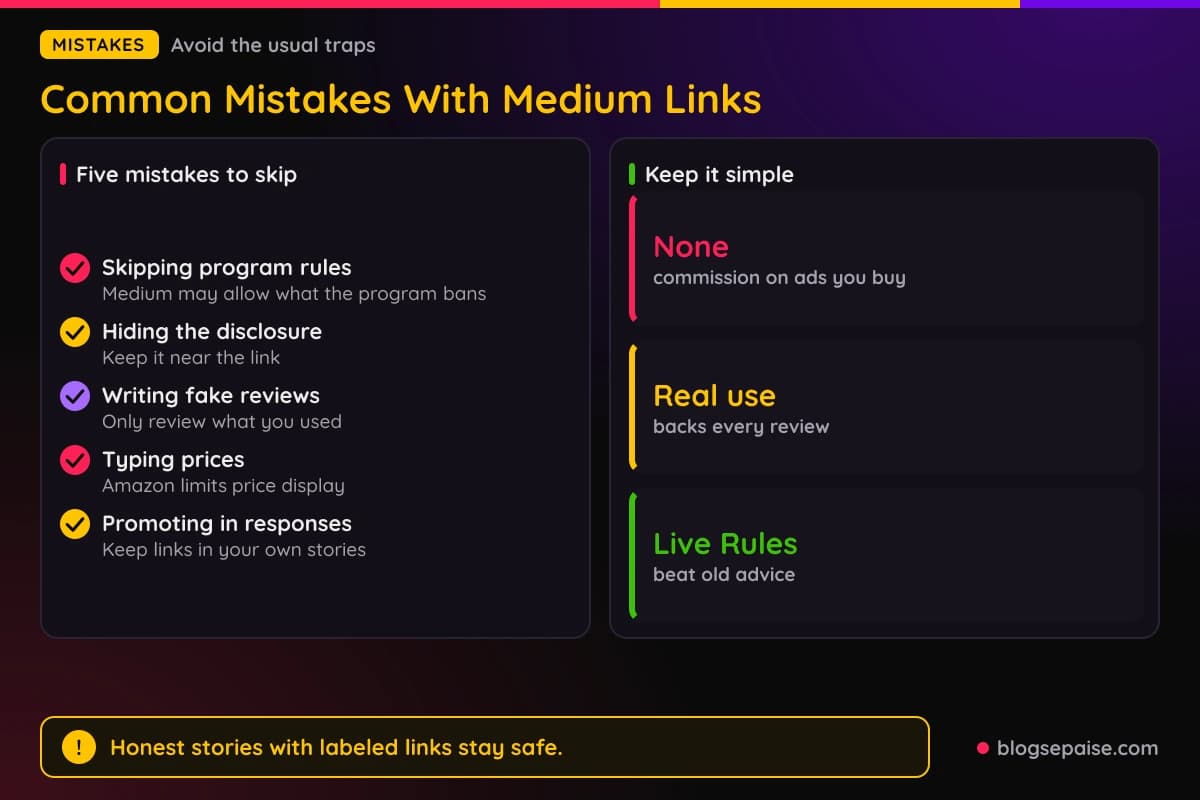
The first mistake is skipping the program's rules. Medium may allow a link that your program does not.
The second mistake is forgetting to list Medium as a site. Amazon says you must identify your Site or Sites in your application.
The third mistake is hiding the disclosure. The FTC wants it near the recommendation and not at the end of a post.
The fourth mistake is writing fake reviews. Medium lists affiliate marketing in the guise of reviews as a reason for suspension, so only review what you have used.
The fifth mistake is stuffing the story with links. A page of buy buttons looks like an ad.
The sixth mistake is typing prices. Amazon limits when a Site can show prices, and a stale price misleads readers.
The seventh mistake is shortening or hiding links. Amazon bars cloaking and unclear shortened links.
The eighth mistake is buying ads for a tagged story. Amazon excludes purchases that come from ads you bought.
The last mistake is trusting old advice. Policies change, so read the live rules before you publish.
Final Thoughts
So, can you use affiliate links on Medium? They can work if you disclose them clearly and follow both your program's rules and Medium's.
Your affiliate program has its own say, and the FTC cares about how you tell readers. Pass all three and your links are in better shape.
Start small. Publish one honest story with a few labeled links, track it, and learn from the result.
If you want more ideas for where to share, read our guide on using Quora and Medium and plan your next story.
Frequently Asked Questions
1. Can you use affiliate links on Medium?
Yes, with care. Disclose the links under FTC rules, follow your program's terms, and avoid affiliate marketing in the guise of product reviews, which Medium lists as a reason for suspension.
2. Can I use my own Amazon affiliate links on Medium?
Amazon's Operating Agreement covers social media user-generated content, but it does not name Medium. Add your Medium profile to your Associates account and ask support if you are unsure.
3. Do I have to disclose affiliate links on Medium?
Yes. The FTC says to disclose a financial relationship with a brand clearly and next to the recommendation, and Amazon requires its own disclosure line.
4. Where should I put the disclosure?
Put it close to the links, as the FTC recommends, and not just at the end of the story.
5. Can I put affiliate links in a member-only story?
Amazon wants your Site to be publicly available, so keeping Amazon-linked stories free to read is the safer choice.
6. Will Medium suspend me for affiliate links?
Medium lists affiliate marketing in the guise of product reviews as a reason for suspension. Honest stories with disclosed links are not what that line describes.
7. Does Medium pay for affiliate clicks?
No. Any commission comes from your affiliate program, and Partner Program pay comes from Medium.
8. Can I link to my blog from Medium instead?
Many writers do. Keep the story complete and useful by itself, and check Medium's current rules before you rely on it.