How To Choose Your First Affiliate Product Without Guessing
Picking your first affiliate product feels like a big decision because it is the first thing your readers will see you recommend. The good news is that you can narrow the list with a few checks that rely on real rules and real program terms.
Below are seven steps. They draw on advice from Google, the Federal Trade Commission (FTC), affiliate networks, and the published terms of programs such as Walmart and HubSpot.
If you are still choosing a topic, read how to choose a profitable niche first. If money is tight, affiliate marketing on a tight budget shows how to start without spending much.
Disclosure: Some of the links I share might be affiliate links. If you click on one and make a purchase, I may earn a small commission as a thank you. But don’t worry, it won’t cost you anything extra. I only recommend stuff I genuinely believe in. Your support helps me keep creating awesome content. You can read my full affiliate disclosure in my disclaimer page.
If you want to save a lot of hours searching for high-paying affiliate programs, check out our exclusive list of 2500+ affiliate programs. You’ll find all the information about the programs inside the list. This list is perfect for affiliate bloggers and influencers.
Why Guessing Costs More Than It Looks
Digistore24, an affiliate marketplace, says many beginners earn nothing in their first few months. That is a reason to make your first pick carefully instead of testing random products.
Google adds a second reason. Its spam policies describe thin affiliate pages as pages that carry affiliate links but copy descriptions and reviews from the merchant without original content or added value.
Google says good affiliate sites add value through things like original reviews, testing and ratings, product comparisons, and extra price information. So your first product should be one you can add real value to.
The steps below start with you and your reader, then move to program terms, product quality, and the content you can write.
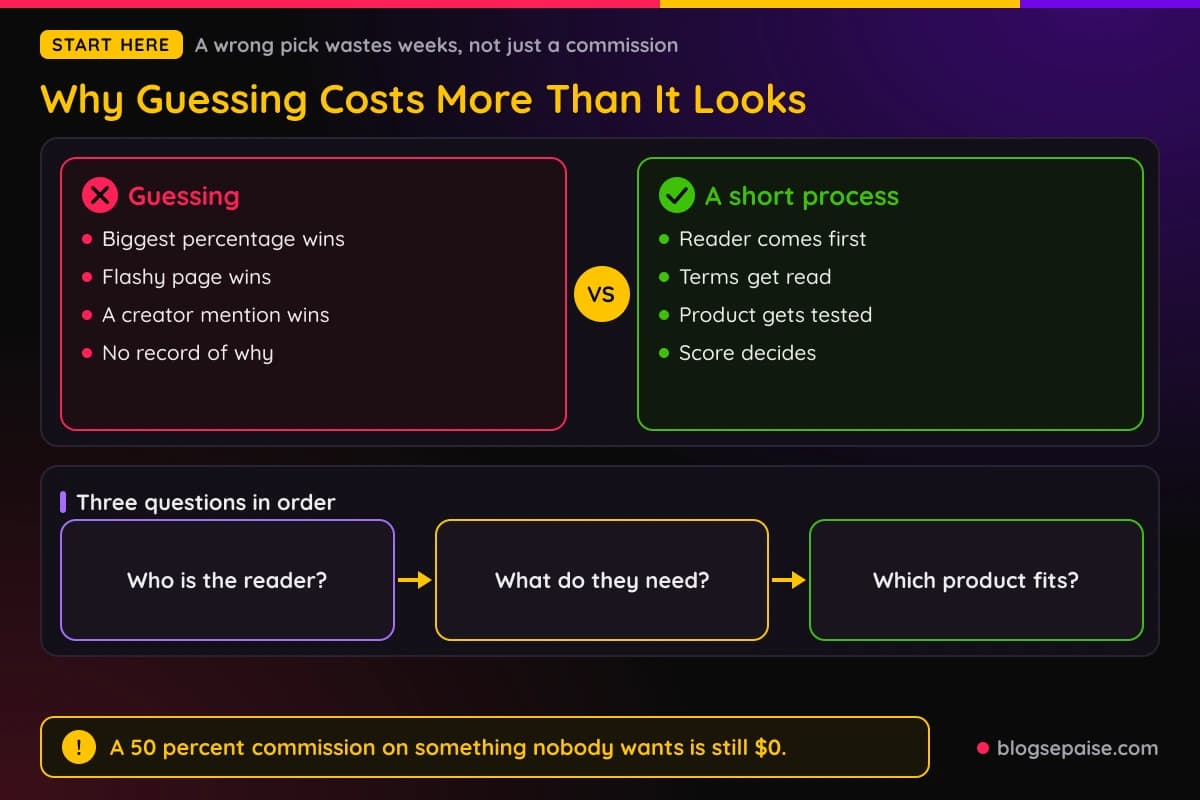
Take them in order. Each step removes a few options, and you should end with one product.
Step 1: Start With A Niche You Know
ThirstyAffiliates, a link management plugin company, suggests choosing a niche you are familiar with. It says your best bet is a niche you already know.
Write down the topics you could talk about for an hour without notes. Then list the products people in those topics buy.
Familiarity helps with the quality checks later in this guide. It is easier to judge a product in a field you understand.
If the list is long, niche down or diversify explains how to narrow it.
Step 2: Pick A Problem Readers Have Right Now
Digistore24 says offers that solve a current, pressing problem consistently convert best. ThirstyAffiliates also advises favoring products that address a significant problem.
ThirstyAffiliates adds that you should watch seasonal trends so you promote items that are relevant now. Digistore24 suggests confirming search demand with a tool like Google Trends.
Start from the problem, not the product. Write the question a reader would type into a search box, then check if people search for it.
Digistore24 also mentions complementary offers that raise revenue per visitor. It gives the example of a supplement or fitness product placed alongside a diet book.
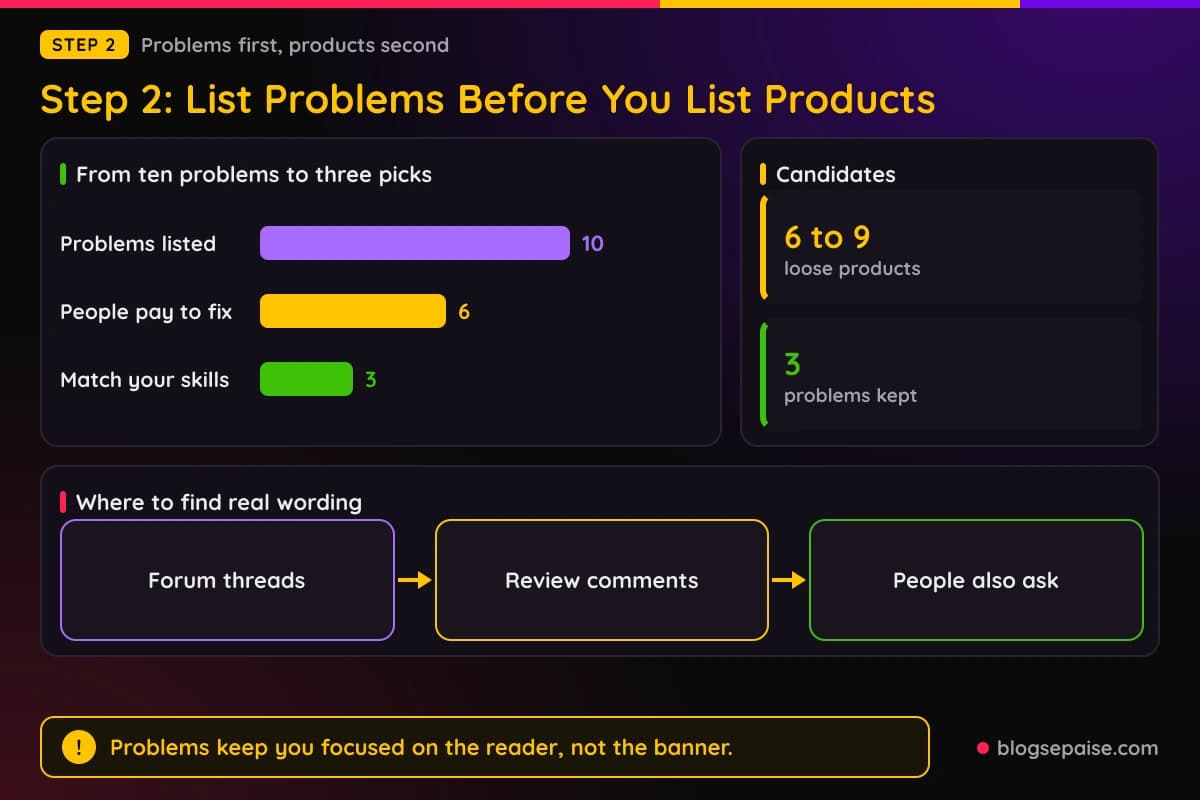
Keep that list of problems. Each one becomes a content idea that can carry a product recommendation.
Step 3: Read The Commission Terms Closely
ThirstyAffiliates says to list the products you like, then check each affiliate commission and popularity. Its advice is to drop the weak ones.
The commission rate is only one line in the terms. Walmart states that commissions exclude returns, refunds, and cancellations, and that payment comes about 90 days after each calendar month ends.
HubSpot lets either side end its affiliate agreement on 15 days written notice. Digistore24 advises looking for at least 30 days notice before a commission change takes effect.
Digistore24 also tells affiliates to check limits on paid search and domains, and to confirm that earned commissions are protected after termination. Those points can matter more than a headline rate.
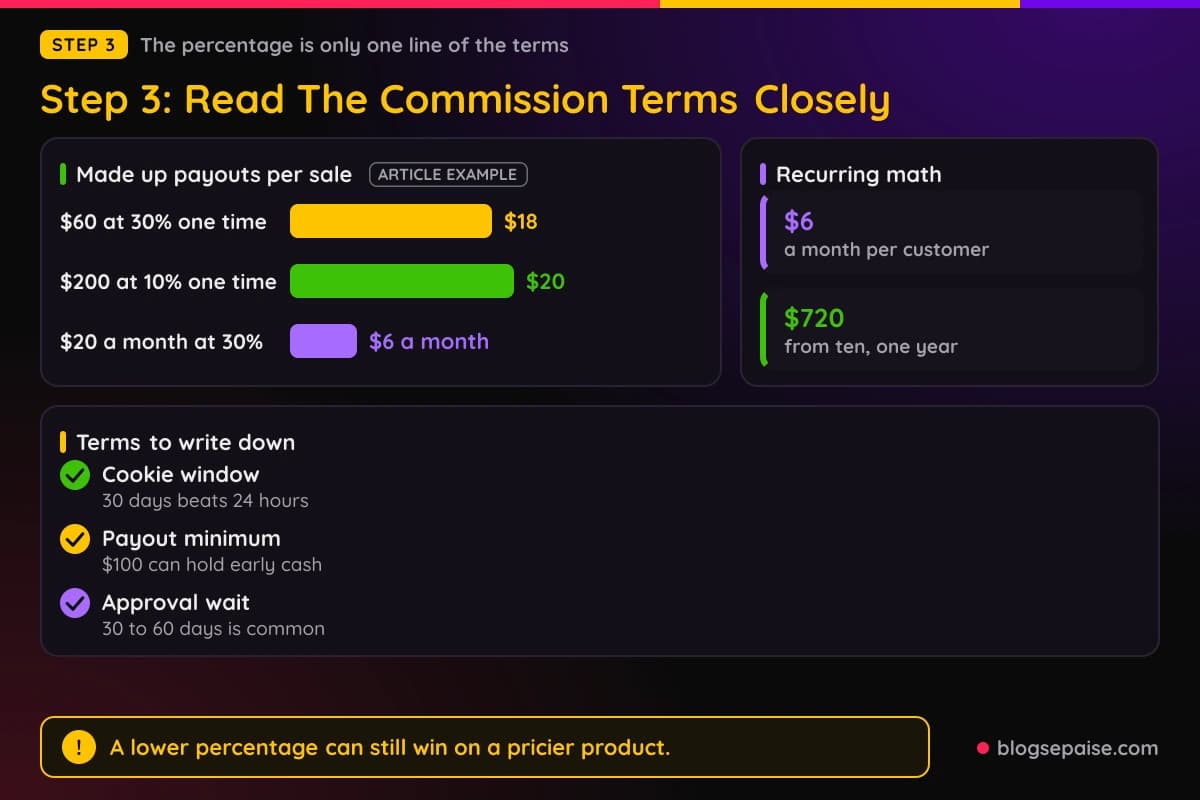
Compare two or three programs on the same lines, and keep the notes. Our guide to reading affiliate program terms covers each section.
Also run the program through the red flags checklist before you commit.
Step 4: Check The Product Is Actually Good
Google says reviews should reflect first-hand experience. Its review guidance asks for evidence such as your own photos, video, audio, or other proof that you used the product.
The FTC says reviews must reflect the reviewer's honest experience and opinion. That means you cannot recommend a product you have not checked and still call it a review.
Check if a free trial or a refund option lets you test the product. Also read independent reviews and look for complaints from people who bought it.
Google also suggests covering alternatives and explaining what sets a product apart from its competitors. A product that you cannot differentiate from the rest is hard to write about well.
Our list of high quality affiliate programs is a place to start looking for products worth testing.
Step 5: Check You Can Write Something Original
Google lists what strong review content includes. Examples are quantitative measurements, pros and cons from your own research, and the key factors buyers care about.
It also suggests linking to multiple sellers so readers can buy from the merchant they prefer. Check the program terms before you add links to other sellers, since some terms limit how you promote.
Ask yourself if you could write three different pieces about the product. For example, a review, a comparison with an alternative, and an answer to a common question.
If you cannot, pick a different product. Copying merchant descriptions is exactly what Google describes as thin affiliation.
Step 6: Start With One Product And One Platform
Digistore24 advises focusing on one platform and one niche before expanding. It also suggests beginning with organic traffic, which it calls the lower-risk option, and adding paid traffic after you know what converts.
The same article treats each piece of content as a data point, not a lottery ticket. Your first product is the first experiment, so write down what happens.
Track clicks and sales from day one. How to track affiliate income when starting shows a simple setup.
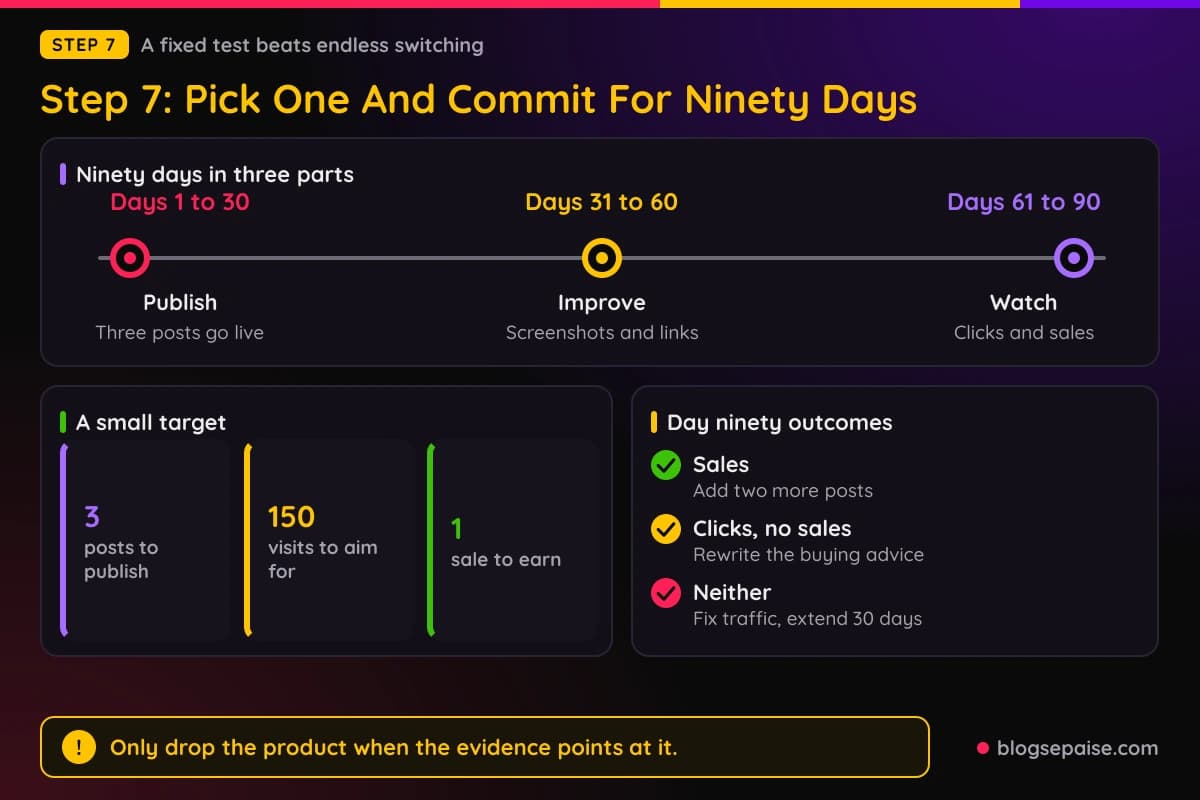
Review your notes after a stretch of consistent publishing. If the product does not fit, switch to the next candidate on your list.
Step 7: Disclose From The First Post
The FTC says to disclose the commission relationship clearly and conspicuously, close to the recommendation. Its example wording is that you get commissions for purchases made through links in the post.
The FTC also says vague labels do not work. Affiliate link and buy now do not clearly signal payment, while paid link placed right beside the link is adequate.
Amazon requires the statement As an Amazon Associate I earn from qualifying purchases, or a similar statement it previously allowed. Walmart requires following FTC endorsement rules and placing a disclosure next to qualifying links.
Set this up before you publish the first post, not after.
Final Thoughts
A good first product fits a niche you know, solves a problem readers have now, has terms you have read, and has quality you can verify yourself.
Add one more filter: you must be able to write original content about it. Google treats copied merchant text as thin, and your readers can tell the difference.
Pick one product, publish consistently, track what happens, and disclose clearly. If the data says it is not working, move to the next name on your list.
Frequently Asked Questions
1. Should my first affiliate product be high paying?
Commission is one factor. ThirstyAffiliates says to check commission and popularity, and Digistore24 says offers that solve a pressing problem convert best, so weigh all three.
2. Do I need to buy the product before I promote it?
Google asks for first-hand evidence in reviews, and the FTC says reviews must reflect your honest experience. A free trial or refund option can help you test it.
3. How many products should I start with?
Digistore24 advises focusing on one platform and one niche before expanding. Starting with one product keeps your notes clear.
4. Can I link to more than one seller?
Google suggests linking to multiple sellers so readers can pick their preferred merchant. Check each program's terms first.
5. What if the program has a long payout delay?
Walmart states payment about 90 days after each calendar month ends. Plan around the delay and read the terms before you commit.
6. Do I have to disclose affiliate links?
Yes. The FTC says to disclose clearly near the recommendation, and Amazon and Walmart both require it in their terms.