Affiliate Marketing In Your First 30 Days: Daily Plan
Most people start affiliate marketing in a way that wastes months.
They read guide after guide, buy a course they never needed, then stare at a blank WordPress dashboard for six weeks without publishing a single page.
A month is short. It is also long enough to get a site live, publish a few solid pages, apply to the programs you want, and see your first clicks roll in.
The trick is doing the right work in the right order instead of grabbing whatever looks interesting first.
So we built a plan with 30 tasks, one for every day of your first month.
Every task is small enough to finish in an hour or two, and every task builds on the work before it.
By day 30 your site will be live, your first three articles will be published, your affiliate accounts will be approved, and you will know exactly which numbers to watch next.
Nothing here needs a big budget. If you have not read our guide on what affiliate marketing actually is yet, start there so the rest of this plan makes sense.
You can also skim how affiliate marketing works to see how a commission actually gets paid out to you.
Disclosure: Some of the links I share might be affiliate links. If you click on one and make a purchase, I may earn a small commission as a thank you. But don’t worry, it won’t cost you anything extra. I only recommend stuff I genuinely believe in. Your support helps me keep creating awesome content. You can read my full affiliate disclosure in my disclaimer page.
If you want to save a lot of hours searching for high-paying affiliate programs, check out our exclusive list of 2500+ affiliate programs. You’ll find all the information about the programs inside the list. This list is perfect for affiliate bloggers and influencers.
How To Use This 30 Day Plan
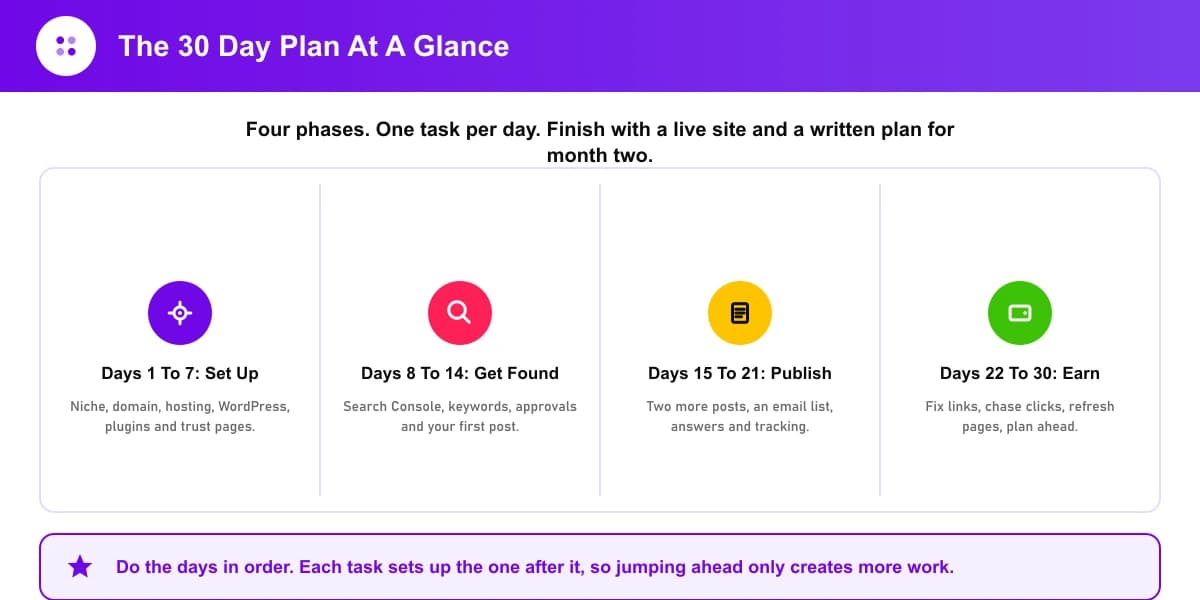
Read the whole plan once before you start so you can see where each day is heading.
The early days cover the setup work every new site needs and most beginners skip.
The middle days cover keywords, affiliate applications, and your first article.
The final days cover tracking, trust, outreach, and planning what comes after the first month.
Do the days in order. Each task sets up the next one, so jumping ahead usually creates more work later.
Keep a simple checklist somewhere you will actually see it. A notes app on your phone works fine.
If a day gets missed, do not restart from the top. Just pick up where you left off the next day.
A daily reminder in your phone does more for your progress than any paid tool ever will.
Week 1 (Days 1-7): Get Your Site Ready To Make Money
Day 1: Decide How Much Time You Really Have
Before you spend a single dollar, work out how many hours you can honestly give this each week.
Most beginners quit in month two. The reason is rarely a lack of skill. They planned for a two hour day and life handed them twenty minutes.
Pick a number you could hit on your worst week, not your best one. Five steady hours a week beats twenty hours you never find.
Write the number down and treat it like a meeting with a paying client. Put it in your calendar before the week fills up.
You will also want a rough budget. Plenty of people start with nothing at all, and our guide on starting affiliate marketing with no money shows how the first month can work on a very small budget.
Day 2: Pick One Niche And One Audience
Your niche decision shapes everything after it. Your keywords, your programs, and your articles all flow out of it.
Pick a topic you could write fifty articles about without running dry. Interest matters less than staying power.
Then narrow it down to a real person. Home fitness for busy parents of toddlers is far easier to write for than health and fitness in general.
Write both down in a single sentence. If you cannot finish that sentence, your niche is still too broad.
Our guide on choosing a profitable niche goes deeper on how to test an idea before you commit to it.
Day 3: Choose Your Domain Name
Find a domain that is short, easy to spell out loud, and tied to your topic.
Skip clever names. If someone hears your site name once, they should be able to type it without asking you to spell it again.
Use the .com ending when the name is free. It reads as more familiar to everyday readers than most of the newer endings.
Avoid hyphens, numbers, and long strings of words. Every extra symbol is another chance for a typo.
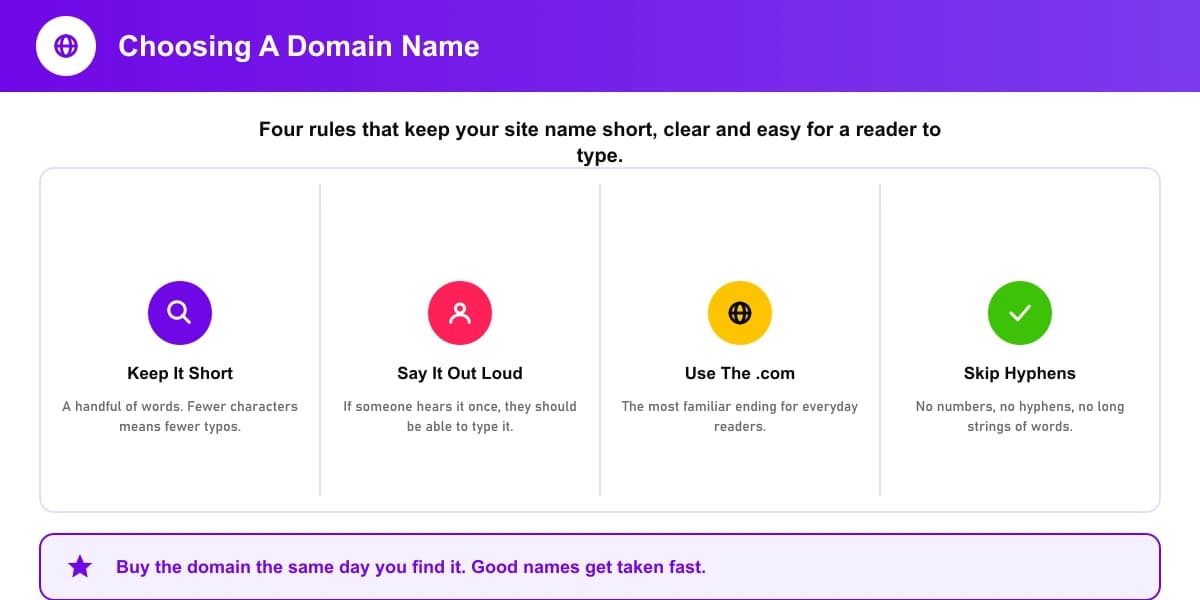
Buy the domain today while it is still available. Good names get taken fast.
Our notes on domain names and hosting cover the details worth checking before you click buy.
Day 4: Get Hosting And Get Your Site Live
Shared hosting costs a few dollars a month and is plenty for a new site with a handful of articles.
Buy a plan that includes a free domain or a free SSL certificate, and pick a data center close to the readers you want.
Point your domain at the host and wait for the change to spread. Most new sites go live within a few hours.
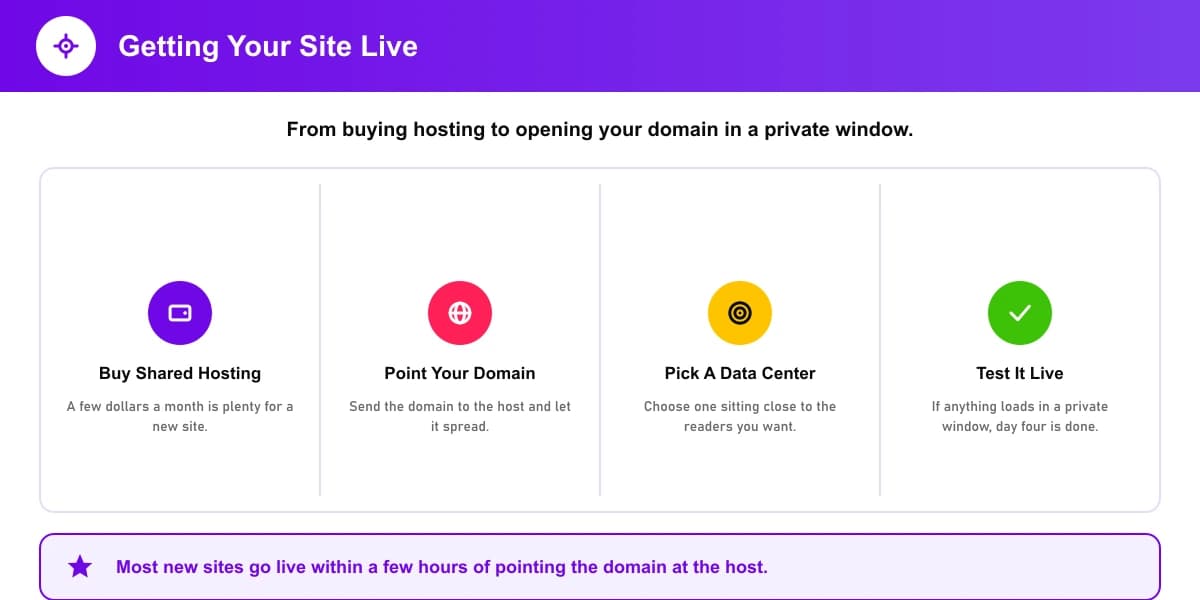
Open your domain in a private window. If anything loads, the hardest part of day four is behind you.
Our guide to cloud hosting providers compares the beginner friendly options.
Day 5: Install WordPress And Set The Basics
Most hosts install WordPress for you with a single click from the control panel.
Log in, change the default administrator password, and set your timezone correctly.
Delete the default hello world post and the sample page that comes with a fresh install. Every extra page slows down your first impressions.
Set your permalinks to use post names rather than numbers. Readable URLs are easier to share and much harder to break later.
Our walkthrough on setting up WordPress walks through each of these steps.
Day 6: Turn On Security And Your SEO Plugin
Two plugins will carry most of the load for a new site: one for security and backups, and one for search.
Turn on automatic backups before anything else. A bad plugin update can take out a new site in a single click.
Install a search plugin and add your site to the search listing. Submit your sitemap inside the tool so search engines know your pages exist.
Resist the urge to install fifteen more. Every extra plugin slows down your pages and adds a new thing that can break.
Our picks for the setup phase are listed in the best SEO plugins for affiliate sites.
Day 7: Build Your First Money Pages
New sites fail the trust test long before they fail the traffic test.
Build four simple pages today: a homepage that says what you cover, an about page with a real name, a privacy policy, and a page that explains how you make money.
The last page is often called an affiliate disclosure. It tells readers when a link might pay you, and readers expect to see it.
Keep every page short. You are building a skeleton you will fill in later, not writing your best work.
Our notes on structuring an affiliate website show how these pages fit together.
Week 2 (Days 8-14): Find Keywords And Publish Your First Post
Day 8: Set Up Search Console And Analytics
Do this today, even though you have no traffic yet. Both tools need time to collect data before they show anything useful.
Search Console tells you which pages Google has seen, how often people search for your topic, and where you rank on average.
Analytics tells you how many people visited, where they came from, and what they did next.
Adding them now means you have a clean record from day one. Adding them in month three means no baseline to compare against.
Our guide on setting up Google Analytics covers the parts beginners usually get wrong.
Day 9: Find Keywords With Real Intent
Find twenty searches your reader would actually type. Twenty is plenty to start.
Look for phrases with clear buying intent, such as best, top, or review. Someone typing those words is close to clicking a link.
Write each one down in a spreadsheet with three columns: the search phrase, the page you plan to build, and the program you will recommend on it.
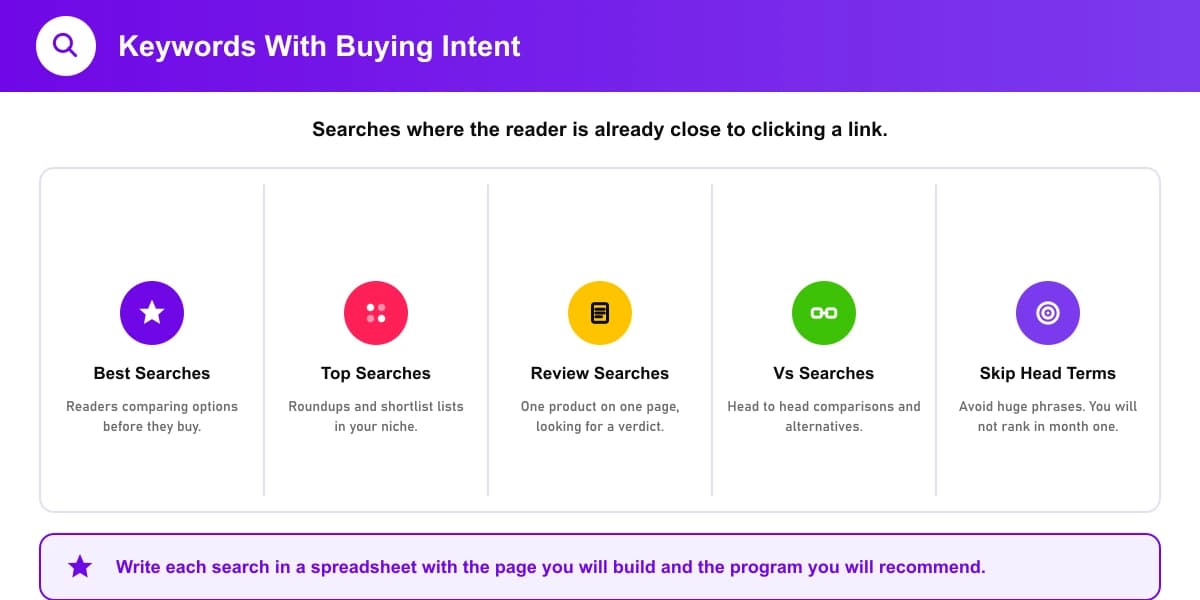
Steer clear of huge head terms like weight loss for your first few posts. You will not rank for those in month one.
Our list of keyword research tools for affiliates covers the free options that work fine at this stage.
Day 10: Apply To Your First Affiliate Programs
Sign up for five to ten programs today, not fifty. Each network has its own approval process, and approval often takes a few days.
Aim for a mix: two large networks for steady approvals, three direct programs from brands in your niche, and a couple of smaller ones that pay well.
Fill in every field on your application. Blank fields and empty websites get rejected fast.
Once approved, find your affiliate link and save it somewhere you can reach it. Most networks bury it behind four menus.
Our guide on finding high quality affiliate programs explains how to tell a good one from a weak one.
Day 11: Build Your First Article Brief
Pick the easiest keyword on your list. Easiest usually means a comparison or a how to with plenty of advice you can give.
Search the top results and write down the questions they answer. You are not copying them. You are learning what a reader expects to find.
Turn that into a short outline: a title, five to eight headings, and one sentence for each section.
Keep the whole outline on one screen. A clear outline is the fastest way to stop the blank page problem.
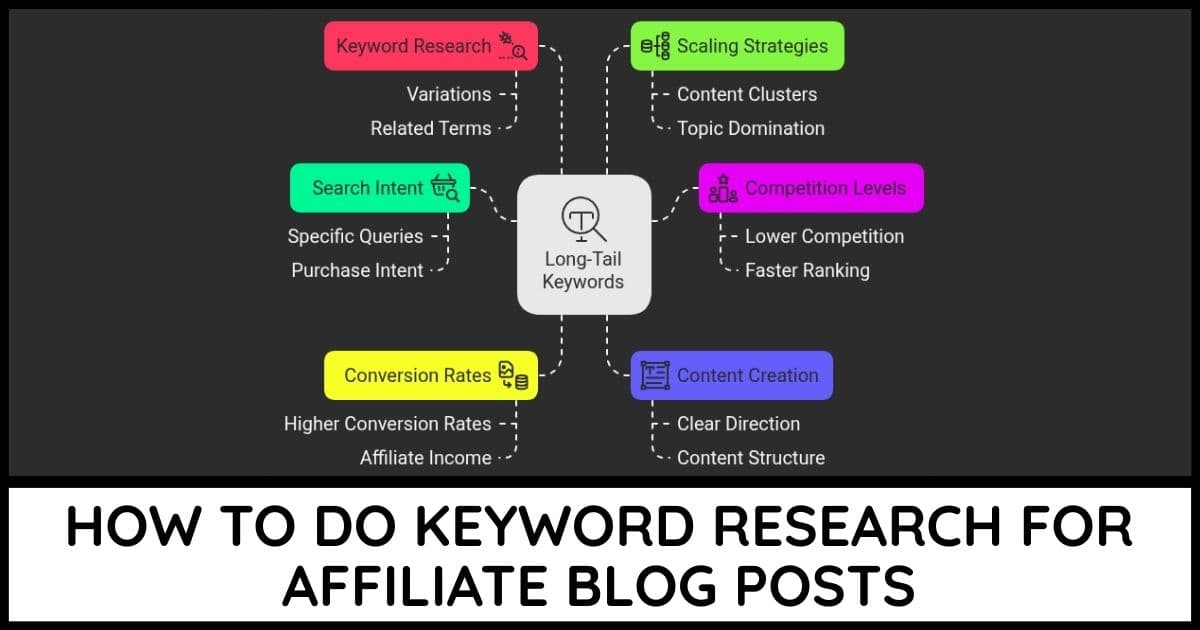
Learning how to do keyword research properly will make every later post easier to plan.
Day 12: Write And Publish Your First Post
Work through the outline from day eleven and publish. Do not wait for it to feel perfect.
Aim for a piece that actually answers the search. Someone landing on your page should find their answer without scrolling back to Google.
Write in plain sentences and keep them short. Long paragraphs are hard to read on a phone, and most of your readers are on one.
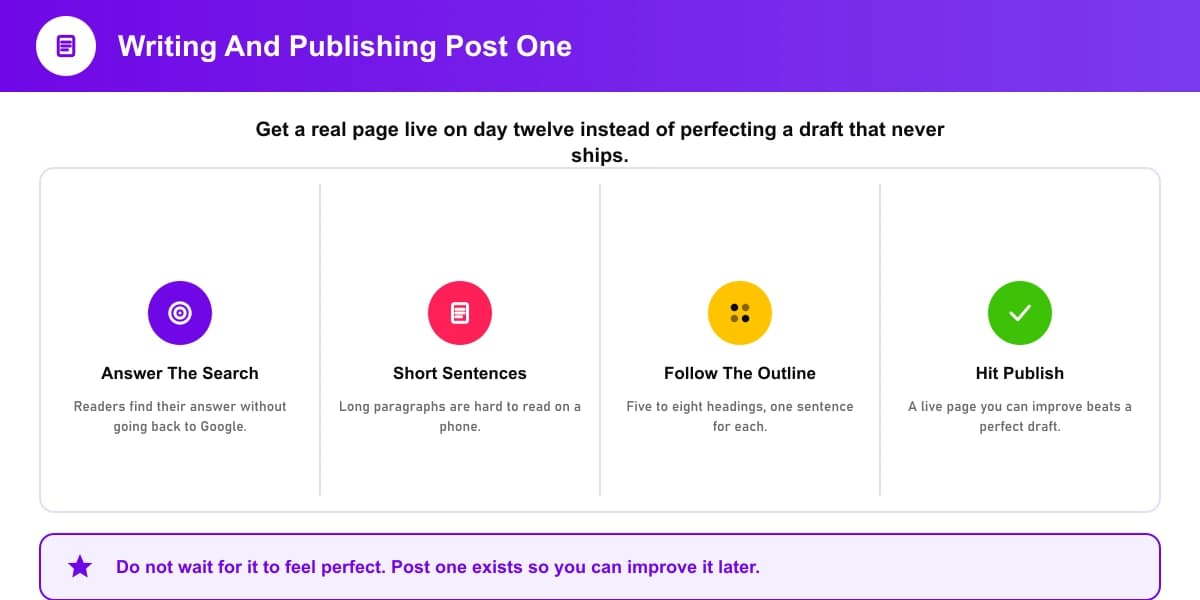
Hit publish on day twelve even if the piece feels thin. A live page you can improve beats a perfect draft you never finish.
Learning how to write reviews that convert will help most with comparison style posts.
Day 13: Add Affiliate Links And Your Disclosure
Go back to your published post and add your links properly.
Link to a product the moment you first mention it, not in a pile at the bottom. A reader who has to scroll to find the link often never clicks it.
Use the same link for the same product every time. Mixing up tracking links makes your dashboard numbers useless.
Add your disclosure near the top of the post, before the first link, and keep it short and plain.
The rules on this are stricter than most beginners expect. Our guide on legal disclosures for affiliate sites covers what you actually need.
Day 14: Tighten Up Everything On Post One
Give post one a full pass with fresh eyes. It is the page every new visitor is most likely to see.
Check the title and description in your search plugin. The description is the snippet people read before deciding to click, so write it for a real person.
Add internal links to and from your homepage and your trust pages. A page with no incoming links is hard for search engines to find.
Read the post out loud once. Stiff sentences show up fast when you hear them, and they are easy to fix while reading.
Our notes on trust building pages explain which pages new sites miss most often.
Week 3 (Days 15-21): Build A Habit Of Publishing And Tracking
Day 15: Write Your Second Post
Your second post should be faster than your first. You already know the routine now.
Pick a different keyword from your spreadsheet and give it a new outline. Do not try to squeeze two keywords into a single page.
Link from post two back to post one with a sentence that explains the connection. Readers will follow it, and so will search engines.
Stop here if you are behind schedule. Two solid posts in fifteen days beats five rushed ones.
Day 16: Start An Email List
Pick a simple email service and connect it to your site today.
Offer something small and useful in exchange for an address. A short checklist or a buying guide for your niche works better than a vague newsletter promise.
Put the signup form on your homepage and at the end of your two best posts, then stop adding it everywhere for now.
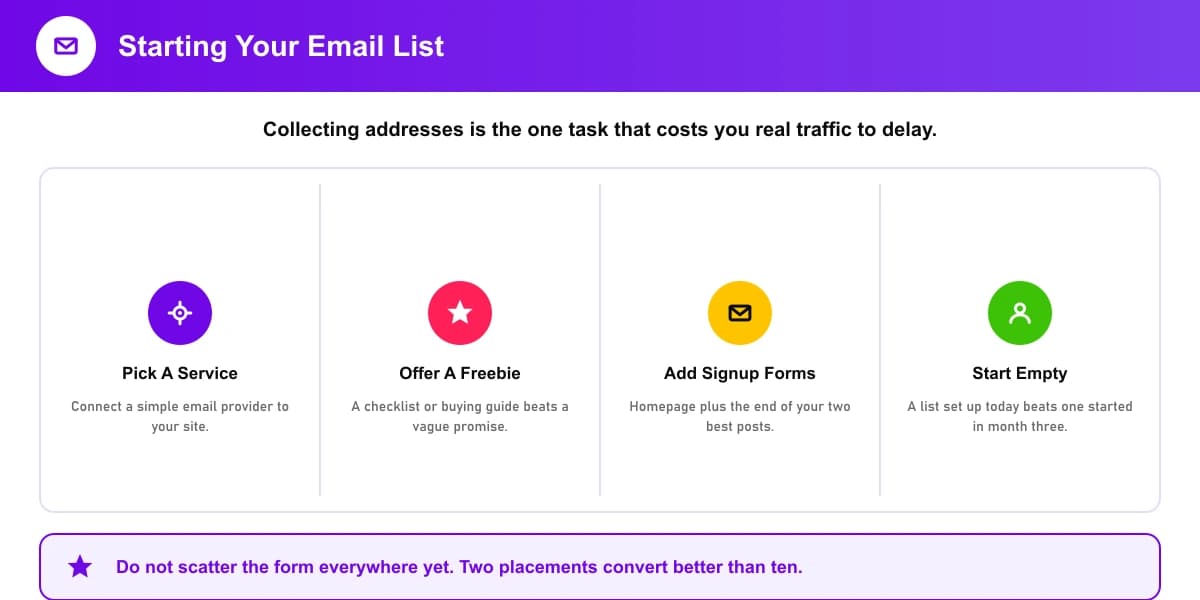
An empty list is still worth setting up now. Starting in month three means you lost three months of addresses you could have collected.
Our guide on choosing an email service provider compares the beginner friendly options.
Day 17: Repurpose Your First Post
Take your first article and cut it into pieces. One post becomes five short social updates and one email.
Pull the best single tip from each section of the article. Each tip works on its own as a short post.
Schedule them across the week instead of posting everything on the same day.
That is the fastest way to stay active on social in month one without burning hours on original content for every platform.
Our walkthrough on repurposing content for social media shows a simple system you can reuse.
Day 18: Answer Ten Real Questions Online
Go to the places your readers already ask questions and answer ten of them today.
Look at forum threads, question sites, and the comment sections of competing pages.
Write a real answer, not a thin reply with a link dropped at the end. Give the full answer first and mention your site only when it fits.
Keep a list of the questions people ask. Roughly a third of them will turn into article ideas later.
That list is often better keyword research than any paid tool gives you, because it comes from real conversations.
Day 19: Set Up Your Tracking Sheet
Build one spreadsheet that tracks your numbers. Keep it simple.
Useful columns include page URL, words, clicks, impressions, average position, and clicks on your affiliate links.
Fill in one row per post and update it once a week. Updates more often than that waste your time without telling you anything new.
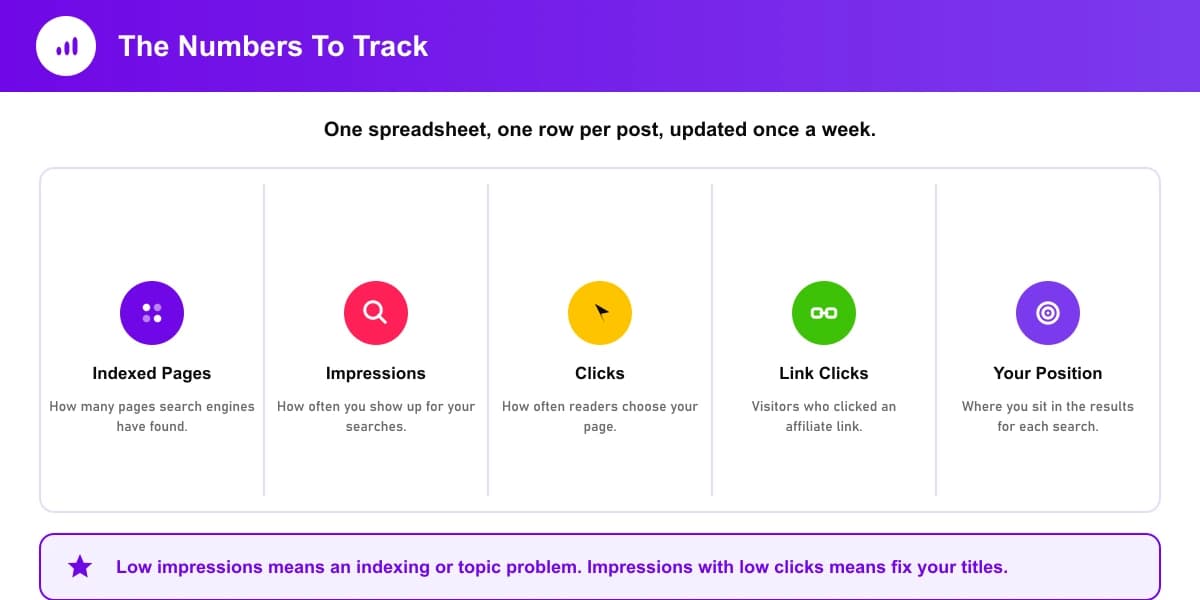
Numbers in one place are far easier to act on than numbers spread across five dashboards.
Our guide to tracking return on investment explains which numbers actually matter.
Day 20: Write Your Third Post
Three posts give your site a real shape. A reader who lands on one now has somewhere else to go.
Make post three a different type from your first two. If both were comparisons, write a how to this time.
A how to post is easier to rank for and it introduces readers to your comparison pages later.
Link from this post to your first two wherever it makes sense, using plain sentence text that explains why you would recommend them.
Day 21: Review Your First Numbers
Three weeks in, sit down with your tracking sheet for thirty minutes.
Most new pages get no impressions at all yet. That is normal. Search engines often need a few weeks to crawl and index a new site.
The numbers worth checking are your indexed pages, your impressions, and your click through rate.
Low impressions usually means an indexing or topic problem. Impressions with low clicks usually means your titles need work.
Our notes on affiliate dashboard metrics explain how to read these numbers without guessing.
Week 4 (Days 22-30): Improve, Reach Out, And Plan Month Two
Day 22: Check Your Links And Chase Clicks
Click every affiliate link on your site today. Open them in a private window.
Broken links are more common than you would think. Programs expire, domains change, and some links only work after you are approved.
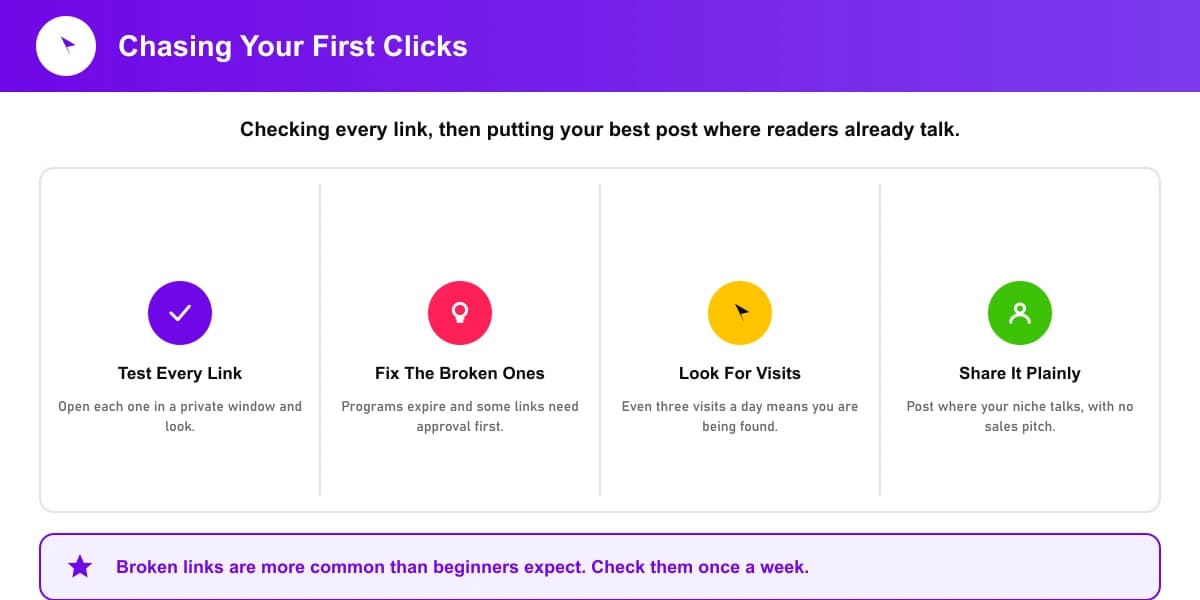
Then look for your first clicks. Even three visits a day is worth knowing about, because it tells you your pages are being found.
Share your best post in a place where your niche hangs out. Do it without a sales pitch, and let the page do the work.
Day 23: Improve Your Money Pages
Take your highest value page and give it one clear call to action.
Add a short summary near the top for readers who want the answer fast, plus a small comparison table if you are recommending more than one product.
Make sure the page answers the question in the title within the first screen. Readers who scroll straight past usually leave.
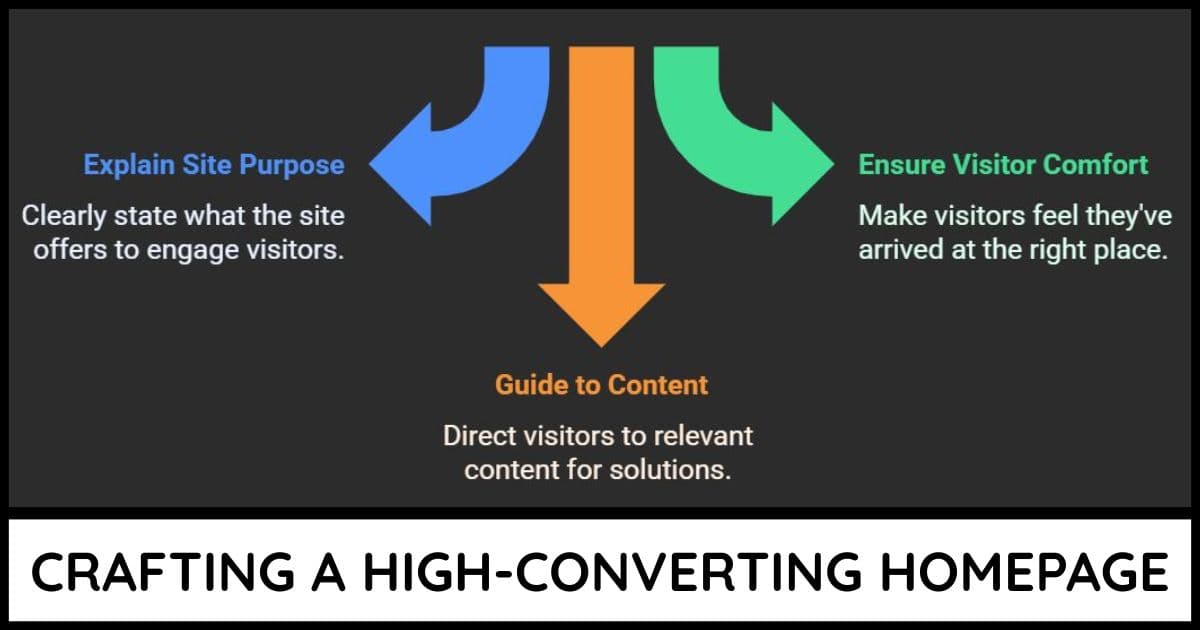
Our guide on building a high converting homepage covers the same fixes for your main pages.
Day 24: Add Trust Pages To Your Site
Even after buying hosting and a domain, most beginners still have nothing that proves a real person runs the place.
Write a genuine about page. A photo, your first name, and a short story about why you started reviewing products in this niche go a long way.
Add a page explaining how you pick products, then one for editing standards. Readers about to spend money want to know what you leave out.
Link all of these from your footer so they appear on every page.
Our guide on trust building pages for new sites lists the exact pages worth adding.
Day 25: Build A Weekly Reporting Routine
Pick a fixed time each week to review your numbers. Sunday evening works well for most people.
Thirty minutes is enough. Check impressions, clicks, your top three pages, and your affiliate link clicks.
Write down the single thing you will change next week. One change is easier to test than five.
Keep the same routine for at least a month before drawing conclusions. Small sites swing up and down week to week.
Our notes on data driven optimization show how to turn those weekly numbers into real changes.
Day 26: Refresh Your Best Page
Take your best performing post and improve it instead of writing a new one.
Add a short summary at the top, tighten the headings, and update any facts that have changed since you published.
Then give the title another look. Most refreshes that work come down to a clearer title and a better opening paragraph.
Refreshing one good page usually brings more return than publishing a fourth average one.
Our guide on creating evergreen content explains why updating old posts pays off so well.
Day 27: Reach Out To Five Bloggers
Find five small blogs in your niche that write regularly and send each owner a short email.
Mention something specific you liked about their site, then point to your best post and offer to write a guest post for them.
Keep the email under a hundred words. Long pitches get ignored, and five replies matter far more than fifty sends.
Do not pitch a paid link in your first message. Guest posts build a real relationship, and that relationship leads to links later on its own.
Day 28: Plan Your Next Thirty Days
Open a new page in your notes and plan the next four weeks the same way you planned this one.
Pick ten articles from your keyword spreadsheet and give each one a target week.
Two posts a week is a comfortable pace for most beginners. Three works if your schedule is calm.
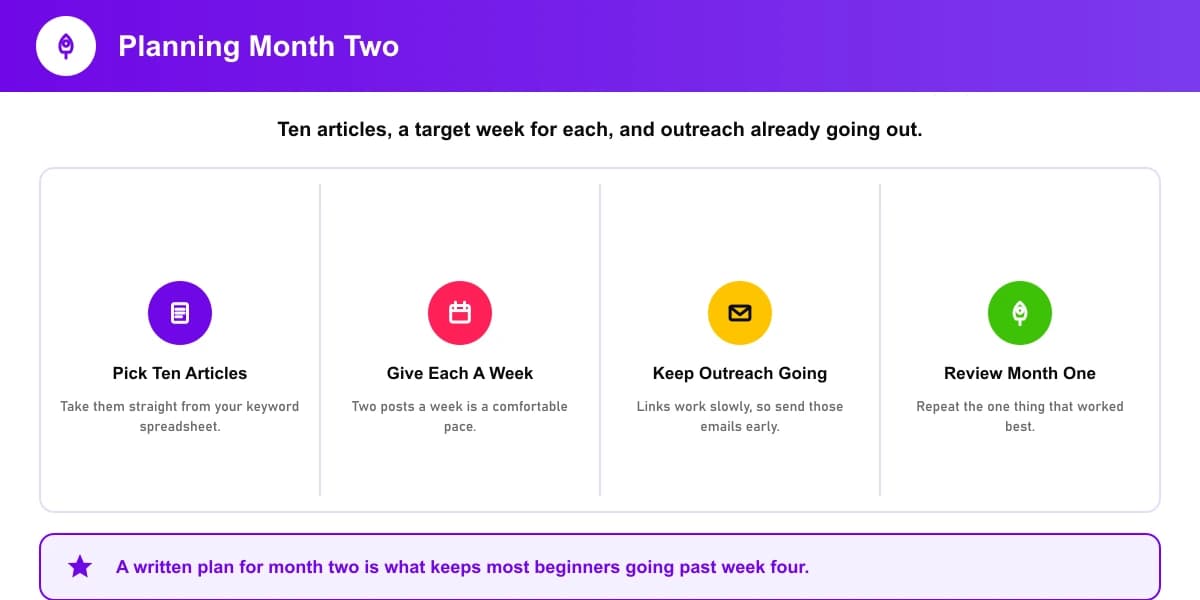
Add the outreach from day twenty seven to the plan too. Link building works slowly, so those emails should go out early rather than late.
A written plan for month two is what separates people who keep going from people who quietly stop after month one.
Day 29: Automate The Boring Parts
Look at the tasks you repeated this month and hand off the dull ones.
Schedule your social posts in advance, set your analytics reports to email you on Monday, and turn on automatic backups again if you turned them off.
New articles can schedule themselves to publish at a set time, so you can write two on Sunday and let them go out through the week.
Keep your hands on research, writing, and relationships. Let a tool handle the scheduling.
Our guide on workflow automation for a one person blog covers the setup that saves the most time.
Day 30: Review The Month And Decide
Close the month the same way you would close any project. Sit down and write three short paragraphs.
First, list what actually got done. Most people find they finished fewer tasks than they planned, and that is useful information.
Second, check your numbers: indexed pages, impressions, clicks, and affiliate link clicks. Write them next to your plan so you can compare.
Third, decide the one thing that worked best and do more of it. If comparison posts brought the most clicks, write more comparison posts.
Then pick the one thing that got in the way and fix it. Usually it is a time problem rather than a skill problem.
What Results To Expect In Your First Month
Set honest expectations before you start, because month one is about building, not earning.
A realistic first month looks like this: a live site, three to five published articles, approval from a handful of programs, and a tracking sheet with numbers in it.
Traffic in month one usually stays small. Most new pages sit at zero impressions for two to six weeks while search engines work through a fresh site.
Some beginners get lucky and rank quickly. That happens, and it creates a bad picture, because chasing the same result usually ends in disappointment.
Your first commissions often arrive between week four and week ten. Plenty of honest sites have not earned a cent by day thirty and still grow into a real business.
Judge month one on your output and your habits, not on your balance.
Common Mistakes New Affiliates Make In Month One
Picking a niche you find boring is the most expensive early mistake. You need fifty articles worth of material, and enthusiasm fades by post ten.
Installing thirty plugins in week one slows your site down and creates a dozen things that can break at once.
Chasing programs before writing anything is another big time sink. You can apply any time, and approvals sit unused until a reader has something to click.
Publishing thin posts just to fill a calendar hurts more than publishing less. Three useful pages will always beat ten empty ones.
Ignoring your own numbers is quiet and common. Nobody checks Search Console, so nobody notices a page that never got indexed.
Buying courses during month one feels productive and usually is not. You cannot buy your way out of not having written anything yet.
Finally, skipping the disclosure is the mistake with real legal consequences. Add it from your very first post.
Final Thoughts
Thirty days is short enough to finish and long enough to change your situation.
Most people who quit in affiliate marketing did not quit because the model was broken. They quit because they worked in the wrong order, or because nobody told them what to do next on a Tuesday afternoon.
Work through this plan one task at a time, and you will finish month one with something real: a site that is live, content that is published, accounts that are approved, and a clear plan for month two.
That is a far better position than the person who is still picking their niche on day forty five.
Keep going after day thirty. The hard part of this business is not the first month, it is staying consistent once the novelty fades.
Frequently Asked Questions
1. How much money do I need to start affiliate marketing?
Most people start with the cost of a domain and shared hosting, which is often under sixty dollars for the first year. A content theme, an email service, and a few tools add a small amount on top. Plenty of people test the whole model with no budget at all before spending anything.
2. How long before I can make my first commission?
Most new sites see their first commission between week four and week ten. Some land sooner and some take longer. The variable that matters most is how many useful, indexed pages you have, not how good your first post happened to be.
3. Do I need a website to do affiliate marketing?
A website gives you somewhere to send traffic and usually makes approval much easier. Platforms and social channels can work for testing, but they leave you with no asset you own and no way to rank for searches. Most serious beginners build a site early.
4. How many articles should I publish in my first month?
Three to five solid articles is a good target. Publishing ten rushed posts does not make your site look bigger to readers or search engines. Quality on day twelve beats volume on day thirty.
5. How do I get approved by affiliate programs faster?
Have a live site with real content, a filled in application with no blank fields, and a clear about page before you apply. Programs in competitive niches look for a few published pages, so applying on day one often gets rejected while applying on day fifteen does not.
6. What if I miss a few days?
Pick up where you left off the next day. Do not try to make up lost days by doing double tasks, since that is how people burn out and quit in month two. The plan works at your pace, not a perfect one.