The 3 Phases of Every Affiliate Career
Nobody goes from zero to a full time affiliate income in one jump. A useful way to think about the road is three phases, where first you learn, then you grow, and finally you run a real business.
The phases below are a planning framework, not measured data. Your own timeline will depend on your niche, your hours, and your skills.
Knowing which phase you are in changes how you spend your time. A beginner who acts like a full time affiliate wastes money, and a full time affiliate who still acts like a beginner leaves money on the table.
Many people quit because they judge phase one by phase three standards. A new site is slow by nature, and Ahrefs found that only 1.74 percent of new pages reached the top 10 of Google within a year.
So we mapped out the path as seven steps you can follow in order. Each step tells you what to focus on and how to know when you are ready to move on.
If you are brand new, our plan for your first 30 days of affiliate marketing is the best place to start. You can also read why most new affiliate sites fail to see how much of that failure is people quitting early.
Disclosure: Some of the links I share might be affiliate links. If you click on one and make a purchase, I may earn a small commission as a thank you. But don’t worry, it won’t cost you anything extra. I only recommend stuff I genuinely believe in. Your support helps me keep creating awesome content. You can read my full affiliate disclosure in my disclaimer page.
If you want to save a lot of hours searching for high-paying affiliate programs, check out our exclusive list of 2500+ affiliate programs. You’ll find all the information about the programs inside the list. This list is perfect for affiliate bloggers and influencers.
The Three Phases At A Glance
Phase one is the learning phase, phase two is the growth phase, and phase three is the business phase. Each phase has its own job.
In the learning phase you pick a niche, set up a site, and publish posts while you learn how search, keywords, and affiliate programs work. In the growth phase you find the posts that earn and build more like them.
In the business phase your site earns enough that you treat it like a company. You protect the income, spread the risk, and decide what to grow next.
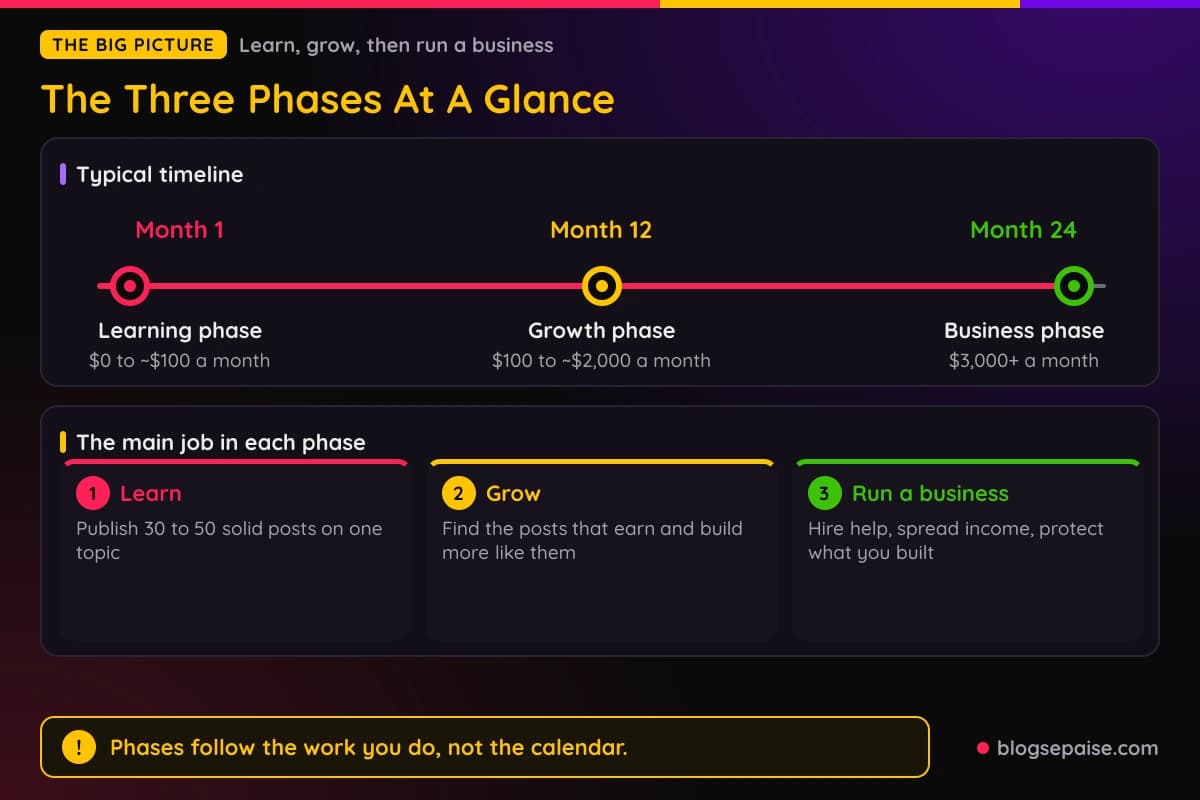
The phases are about what you do, not how long you have been doing it. A person who publishes two posts a month can stay in phase one for years, while a person who publishes steadily can move on much sooner.
Think of the phases like grades in school. You cannot skip the lessons in one grade and expect to pass the next.
Step 1: Accept That Phase One Is The Learning Phase
Phase one is where you pay for your education with time instead of money. You will work hard and see little for it at first.
Search takes time to trust a new page. Ahrefs reports that the average page ranking number one on Google is 5 years old, so a new site starts far behind older pages.
That is why phase one feels slow for almost everyone. The affiliates who share big income reports went through the same quiet months before you started reading their posts.
The trick is to change how you score yourself in phase one. Stop measuring income, and start measuring output and skill.
Count the posts you published, the keywords you learned to find, and the programs you got approved for. Those numbers move every week, even when the income line stays flat.
Our guide on the truth about passive income in affiliate marketing explains why the money shows up so long after the work. Read it when the flat line starts to get to you.
Phase one can feel lonely because nobody can see your progress yet. Keep a simple log of your work and look back at it once a month.
Step 2: Build Your Foundation In Phase One
Phase one has a clear job list, and the order matters. You pick a niche, set up a site, learn keyword research, publish posts, and join programs.
Start with one niche you can stay with for a long time. Our guide on the choice to niche down or diversify shows why one focused topic gets you to proof faster than several topics split apart.
Next, get your site live on a host. Plenty of beginners start on Hostinger, and any reliable host will do the job.
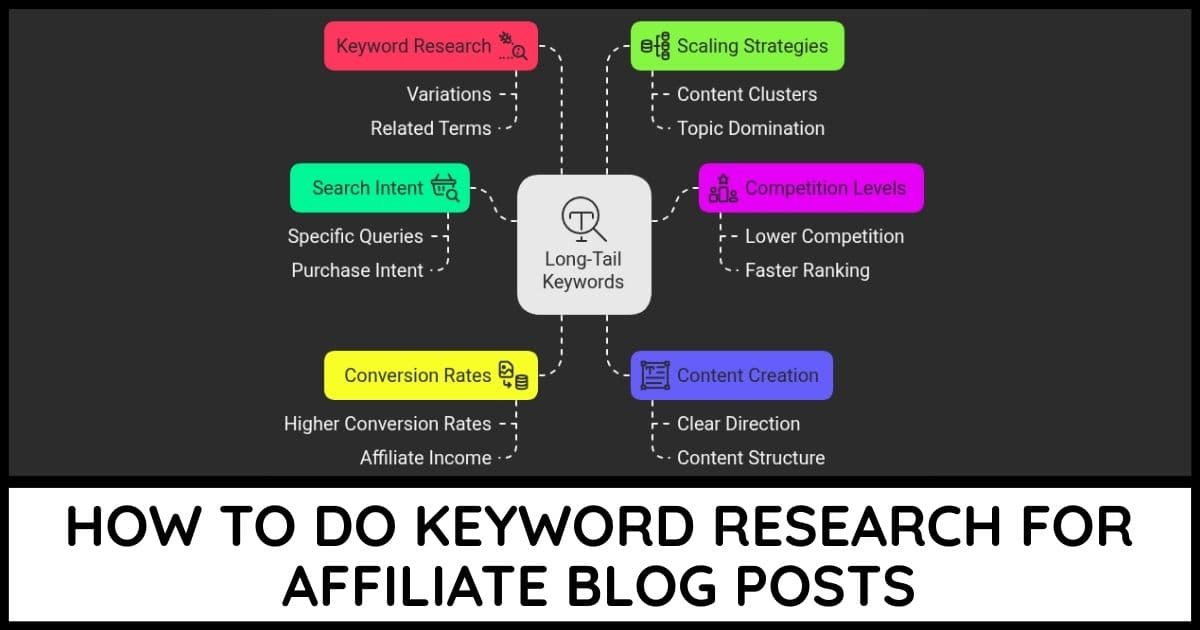
Then learn to find keywords that real people search for. A keyword tool helps because it shows how often a phrase is searched and how hard it is to rank for it.
After that, the real work begins. Write posts on one topic for people who are close to buying something.
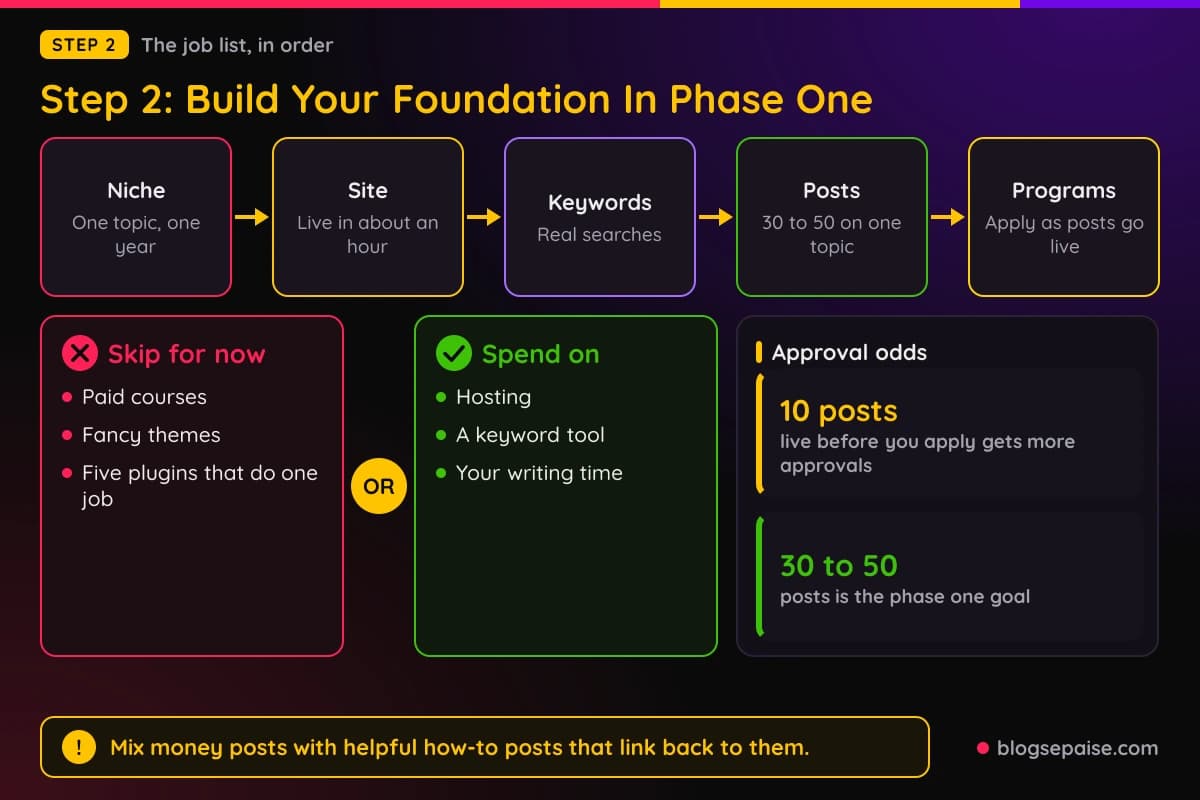
Mix your posts on purpose. Write a few reviews and comparisons that can earn, and pair them with helpful how-to posts that bring in readers and link back to the money pages.
Apply to affiliate programs as your posts go live. Programs review your site before they approve you, so a site with real content has a better case than an empty one.
Last, set up basic tracking. You need to know how many people visit, which pages they read, and which links they click, even if those numbers are tiny for now.
Keep the tools simple in this phase. Spend your money on hosting and a keyword tool, and put the rest of your effort into writing.
Step 3: Know The Signs Phase One Is Ending
Phase one does not end on a date. It ends when your site starts to give you real data you can act on.
The first sign is steady traffic. Once you have enough readers, you can see patterns in what they click.
The second sign is repeat commissions. One sale can be luck, but small sales showing up month after month mean something is working.
The third sign is a handful of posts on page one of search. When several of your posts rank on the first page for their main keyword, you know your process can produce winners.
The fourth sign is a habit that has held up. If you have published on a steady schedule for months, you have proven to yourself that you can keep going.
You need all four signs, not just one. Traffic without sales means your posts attract readers who are not ready to buy, and sales without a habit means the income will fade when you stop.
If you only have one or two of these signs, look at which sign is missing. Then spend the next stretch of work fixing that one gap.
Our blog income tracker makes this check easy, because your traffic and commission numbers sit side by side in one place. Review it once a month and the end of phase one becomes easier to spot.
Step 4: Find What Works In Phase Two
Phase two is the growth phase, and it feels different from phase one. For the first time, you have data about what earns.
Here is the big idea of phase two. Usually a few posts bring in most of your money, and your job is to find those posts and build more of them.
Open your affiliate dashboards and match each sale back to the page that sent it. Sort your posts from the most money to the least, and look hard at the top of that list.
Ask why those posts win. Maybe they target a certain type of keyword, cover a certain product type, or answer a question that buyers ask right before they pay.
Once you see the pattern, write down a simple rule for your site. That rule becomes your plan for the next stretch of publishing.
Look at the bottom of the list too. Posts that get traffic but no clicks might need a better product pick, a clearer comparison, or a stronger link near the top of the page.
Be careful not to chase every shiny idea in this phase. New niches, new platforms, and new tools all look exciting, but doing more of what already works is the safer path.
Step 5: Double Down And Build Systems In Phase Two
Once you know what wins, double down on it. If your best posts are comparisons, write more comparisons in the same topic area before you try anything new.
Build out each winner into a small group of posts. A winning review can support a comparison, an alternatives post, and a how-to guide that all link back to it.
Our guide on how to build topical authority explains why groups of related posts make a site stronger. Covering one topic from many angles gives readers and search engines more reasons to trust you.
Phase two is also when you start updating old posts. Your top earners need current prices, current products, and working links.
Start an email list in this phase if you have not already. MailerLite has a free plan that covers up to 250 subscribers and 2,500 emails a month, which is enough to begin.
An email list gives you readers you can reach without depending on search. That makes it a useful first step toward spreading your risk.
Step 6: Step Into Phase Three As A Full Time Affiliate
Phase three is the business phase. Your site now earns enough that it could replace a paycheck, and you start to treat it like a real company.
The biggest question in phase three is when to quit your job. Our rule is to wait until your affiliate income has covered your monthly bills for several months in a row, with savings in the bank for living costs.
Affiliate income moves around more than a salary does. A buffer lets you ride out a slow month, a program change, or a drop in search traffic without panic.
The way you work also changes in phase three. You stop being the only person who does everything and start acting like the owner who decides what gets done.
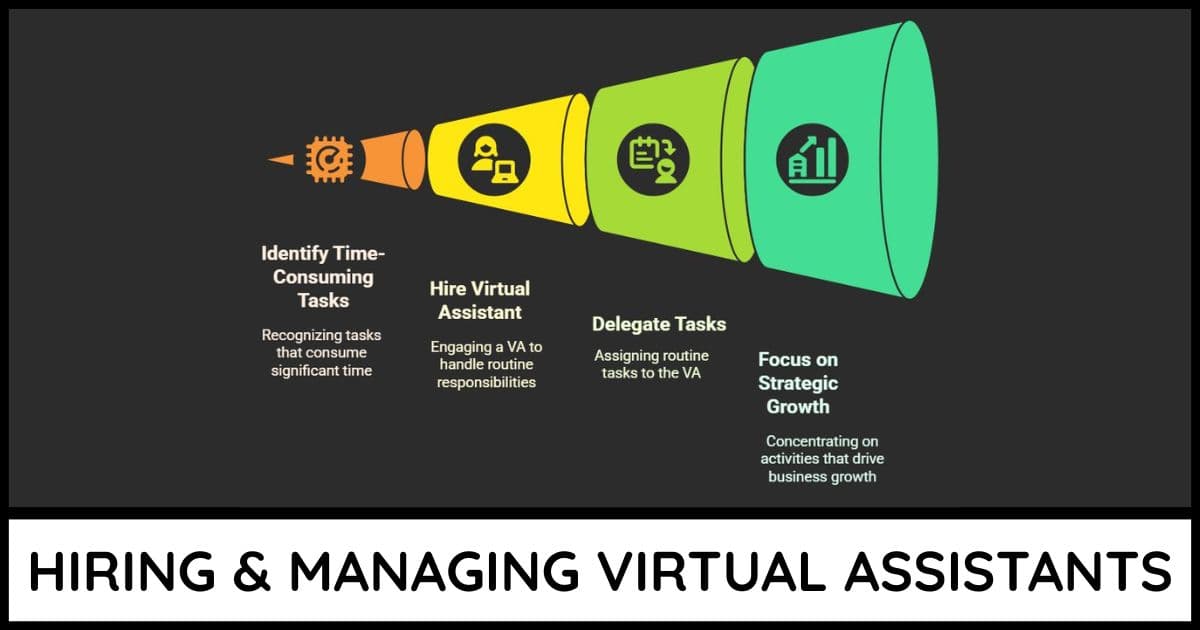
Many affiliates hand off writing, editing, or admin tasks at this stage. Our guide on managing virtual assistants shows how to hand off work without losing quality.
Keep the parts of the business that need your judgment. Picking topics, choosing products, and approving final posts should stay with you.
Step 7: Protect And Grow Your Income In Phase Three
Earning a full time income is one goal, and keeping it is another. Phase three is where you protect what you built so one bad week cannot wipe it out.
Start with your income sources. Affiliate programs can change their terms, so try not to let a single program make up most of your income.
Spread your traffic too. If search sends nearly all of your visitors, one algorithm update can hurt your income, so build your email list and test one more channel like YouTube or Pinterest.
Reinvest part of your profit back into the business. Put it into new content, better tools, and help from other people.
A site that stops getting new content slowly loses ground, while a site that keeps adding good posts keeps growing. Think of that money as fuel for the next stage.
Phase three is also when it makes sense to grow wider. Once your first site runs smoothly, you can add a close neighbor topic, build a second site, or create your own product to sell to your readers.
Take each of those moves one at a time. A new project should get the same patient phase one treatment your first site got.
Our affiliate income goal planner can help you set targets for each new project.
Keep your disclosures clear as you grow. The FTC says to disclose a material connection with a brand next to the endorsement itself, not in a profile or at the end of a post.
What Shapes How Long Each Phase Takes
Your own timeline depends on a few things you control. The biggest one is how many hours you can give the project each week.
Your niche matters too. A niche with high priced products and strong buyer searches can move you through phase two faster than a niche with cheap products and low commissions.
Skill speeds things up as well. People who already know how to write well or do keyword research spend less time learning the basics.
The one thing that slows everyone down is stopping and starting. A site that gets a burst of work, then a long silence, then another burst can stay in phase one for years.
Life events count as well. A move or a busy season at work can pause your progress, and that is normal as long as you come back and pick up where you left off.
A simple way to check your pace is to keep a monthly count of three numbers. Write down how many posts you published, how many visits you got, and how much you earned.
If posts are rising but visits are flat, give the site more time before you change anything. If visits are rising but income is flat, add a clear product mention or a comparison to the pages that get the traffic.
Steady beats fast in every phase. Regular publishing will take you further than a burst of posts followed by nothing.
Common Mistakes At Each Phase
Each phase has its own trap, and knowing the traps ahead of time makes them easier to avoid.
The biggest phase one mistake is quitting early. New pages take time to rank, so the first real results often arrive after the point where most people give up.
The second phase one mistake is switching niches every few months. Each switch resets the clock, and a person who keeps switching can stay in phase one without ever finishing it.
The biggest phase two mistake is ignoring your winners. Many affiliates find a post that earns and then go back to writing random topics, when they should be building more posts like the winner.
The second phase two mistake is adding a new niche too early. A second topic splits your hours right when your first topic is starting to grow.
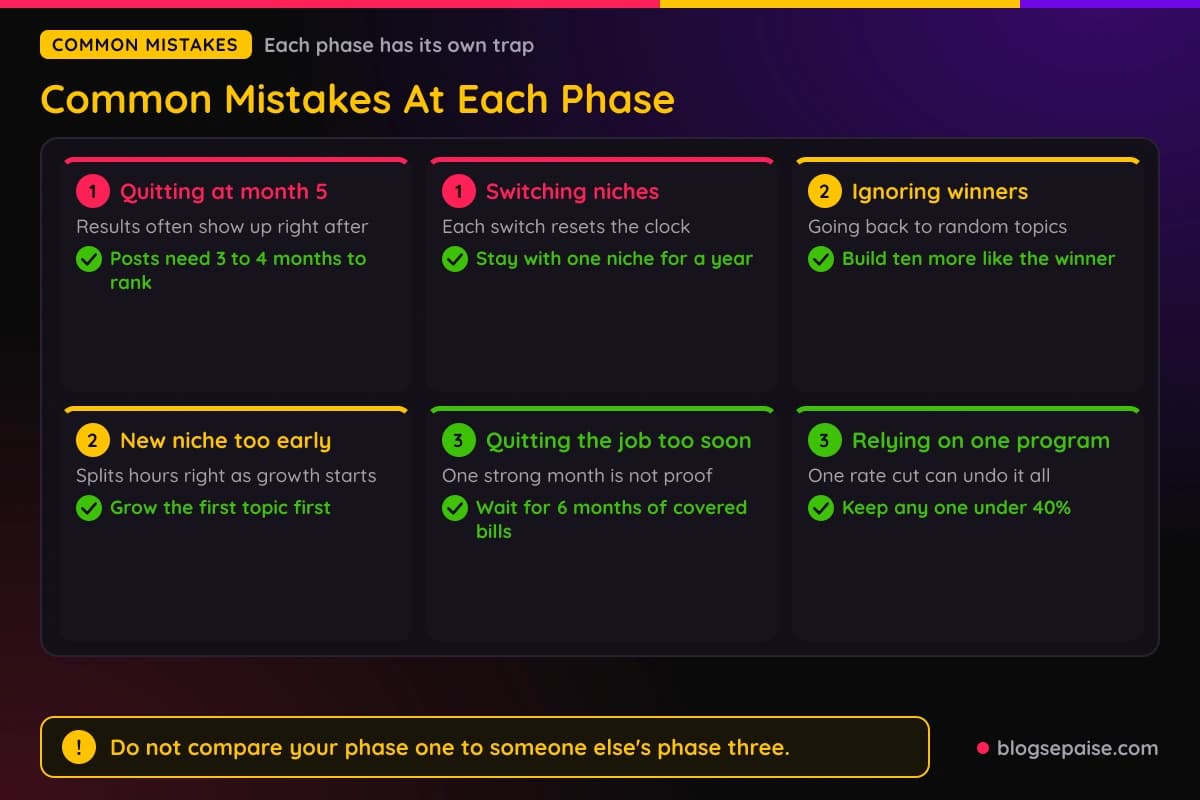
The biggest phase three mistake is quitting your job too soon. One strong month feels like proof, but income that has covered your bills for several months is better evidence.
The second phase three mistake is relying on one program. If one partner makes up most of your income, a single email about lower rates can turn your full time business back into a side project.
There is one mistake that shows up in every phase. People compare their phase one to someone else's phase three, see the gap, and decide they are failing.
Read stories from other affiliates with care. Our post on the affiliate blogging journey shares what the slow middle part looks like.
Final Thoughts
Every affiliate career moves through the same three phases. You learn, you grow, and then you run a business.
Phase one asks for patience while you publish and wait for search to catch up. Phase two asks for focus while you find the posts that earn and build more like them.
Phase three asks for discipline. You go full time only after your income has covered your bills for a good while and you have savings, and then you protect that income by spreading it across programs and channels.
The phases are not a race. Figure out which phase you are in right now, do the work that phase asks for, and let the next phase come when your data says it is ready.
Frequently Asked Questions
1. Which three phases does every affiliate career go through?
The three phases are the learning phase, the growth phase, and the business phase. You learn the basics and publish, then you find what earns and grow it, and finally you run the site as a real business.
2. How long does it take to go from beginner to full time affiliate?
It depends on your niche, your hours, and your skills. Ahrefs found that only 1.74 percent of new pages reached the top 10 within a year, so plan for a long road.
3. How do I know I have moved into phase two?
Look for steady traffic, small commissions month after month, and several posts on page one. When you see all of those, your site is ready for the growth phase.
4. When should I quit my job to become a full time affiliate?
Wait until your affiliate income has covered your bills for several months in a row, and save living costs first. Affiliate income can rise and fall from month to month.
5. Can I skip a phase if I have money to invest?
Not really. Money can buy writers and tools, but it cannot buy the data that tells you which posts earn.
6. Should I hire help in phase one?
Usually no. Doing the work yourself in phase one teaches you what good content looks like, which you need to know before you can judge anyone else's work.
7. Is it normal to feel stuck in the middle of phase one?
Yes. New sites rank slowly, so the work can feel endless while income stays close to zero.